
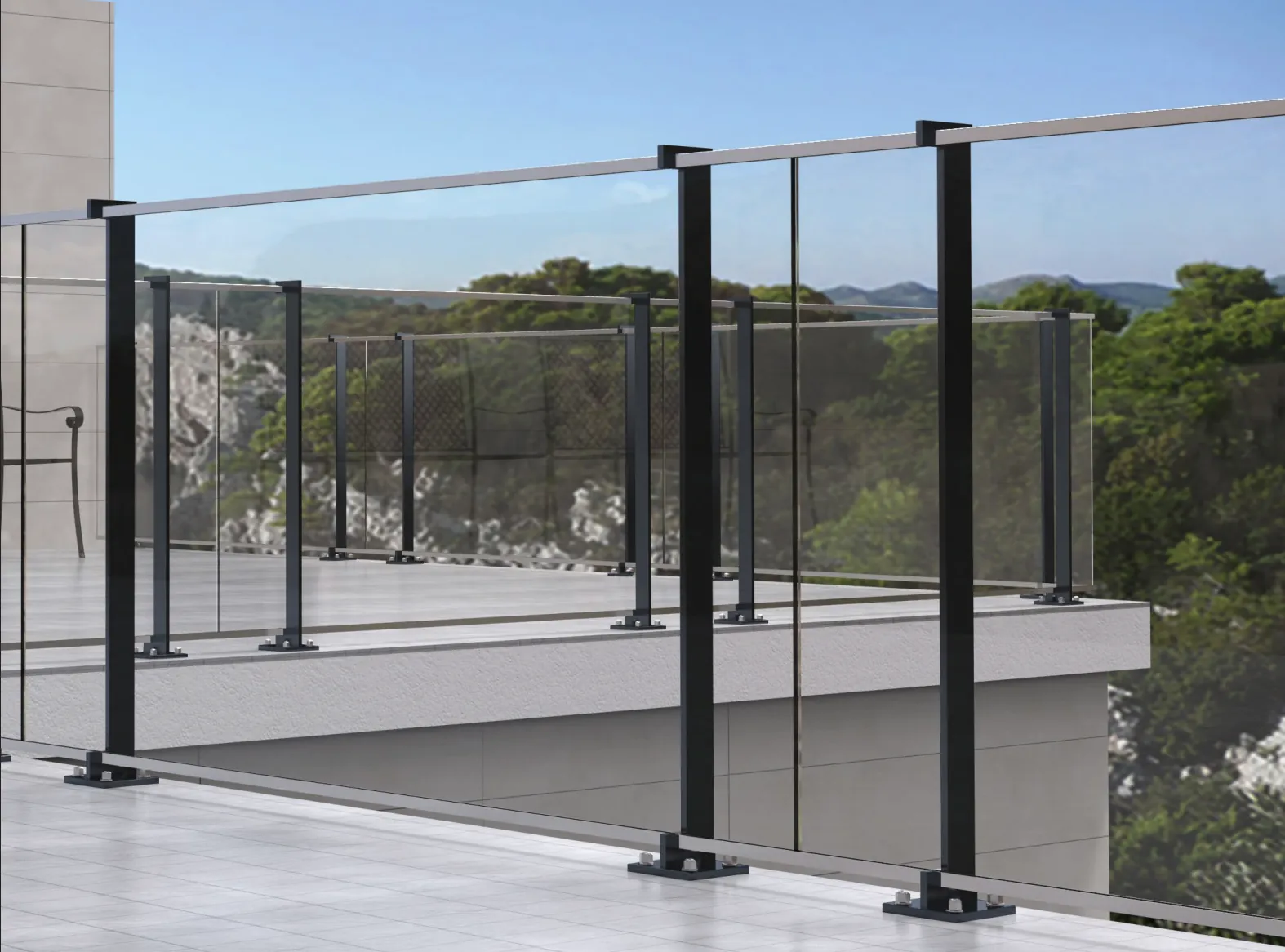
A glass balustrade provides safety without losing your view. You often see balustrade glass on balconies, stairs, voids, roof terraces, platforms and verandas. But you don't just choose glass for a balustrade: it must be strong enough, break safely and match the mounting system. The short rule is: for a glass balustrade always use laminated safety glass or tempered-laminated glass. Standard glass or tempered glass alone is usually not suitable, because the glass should not simply fall open if broken.
In this article we explain which glass to choose for a balustrade, which thicknesses are often used and what you should pay attention to with clamps, profiles and point holders.
What is balustrade glass?
Balustrade glass is glass that is used as a partition or fall protection. The glass prevents someone from falling from a height. You will see balustrade glass in:
- balconies and roof terraces
- stairs, voids and landings
- French balconies and galleries
- verandas and terraces
- swimming pools and public buildings
A glass balustrade must therefore not only be beautiful, but above all safe and strong.
Why can't you just use any glass?
A balustrade has a safety function. If someone leans, falls or pushes against it, the glass must be able to absorb that load. Even in the event of breakage, an open hole should not immediately form.
- Normal glass is unsuitable: it breaks into large sharp shards and does not stay in place.
- Only tempered glass is usually not sufficient. Tempered glass is strong and breaks into small grains, but it falls apart when broken. With a balustrade you want the glass to hang as much as possible in the event of breakage.
That is why balustrades are usually chosen for laminated safety glass, tempered-laminated safety glass or a structure that matches the mounting system. Both fall under the safety glass category.
Rule of thumb: tempered glass breaks safely, but falls open if broken. Laminated glass remains intact if broken because the shards stick to the foil. A balustrade is fall protection, so it requires laminated or tempered glass.
You can read more about this difference in tempered or laminated glass.
What is laminated safety glass?
Laminated glass consists of two or more sheets of glass with foil between them. If the glass breaks, the shards remain stuck to the foil. As a result, the window remains better as a whole. This is important with a balustrade: the glass should not fall open immediately if one glass layer breaks.
Advantages of laminated glass:
- shards stick to the foil
- better for risk of falling through
- safer than normal glass
- suitable for balustrades with the correct construction
- also suitable for stairs, voids and balconies
- can be combined with tempered glass layers
The correct structure depends on the application and mounting. In what is laminated glass we will go into more detail about how it works.
What is tempered-laminated glass?
Tempered-laminated glass combines two properties:
- the glass is hardened and therefore stronger than normal glass
- the glass is layered and sticks better to the foil if broken
This often makes tempered laminated glass a good choice for balustrades. It is often used on balconies, stairs, voids, roof terraces, glass with point holders, glass in profiles, larger glass plates, outdoor balustrades and situations with higher loads.
Tempered laminated glass is more expensive than standard laminated glass, but often offers more security and strength.
Why is tempered glass alone not enough?
Tempered glass is strong, but it breaks differently than laminated glass. When tempered glass breaks, it shatters into small pieces. This is safer than sharp shards, but with a balustrade this immediately creates an opening.
Tempered glass can be fine for a shower wall or glass door. This is different with a balustrade, because the glass provides fall protection. The simple rule:
- tempered glass breaks safely
- Laminated glass holds up better if broken
- for balustrades you usually need the latter
That is why you usually choose laminated or tempered-laminated glass for balustrades.
What thickness of balustrade glass do you need?
The correct thickness depends on several factors. So there is no one thickness that is always right. Important factors are:
- height difference
- size of the glass plate
- indoor or outdoor use
- wind load
- type of mounting and distance between clamps
- profile or point holders
- with or without a handrail
- usage function and load by persons
- mounting surface
Commonly used bodies are, for example, 66.2, 88.2 or heavier, but the right choice must always suit the situation. See also which glass thickness to help determine.
What do codes like 66.2 or 88.2 mean?
With laminated glass you often see codes such as 44.2, 66.2 or 88.2. An example:
- 66.2 glass usually means 6 mm glass + 6 mm glass + 2 films in between.
- 88.2 glass means 8 mm glass + 8 mm glass + 2 films in between.
The first numbers indicate the glass thicknesses. The number after the dot indicates the number of foils.
| Construction | Meaning | Glass thickness together |
|---|---|---|
| 44.2 | 2 × 4 mm glass + 2 foils | 8 mm |
| 55.2 | 2 × 5 mm glass + 2 foils | 10 mm |
| 66.2 | 2 × 6 mm glass + 2 foils | 12 mm |
| 88.2 | 2 × 8 mm glass + 2 foils | 16 mm |
| 1010.2 | 2 × 10 mm glass + 2 foils | 20 mm |
Balustrades often use a heavier structure than normal windows.
Balustrade glass inside or outside
Balustrade glass inside is subject to a different load than balustrade glass outside. Outside, wind, rain, temperature differences and dirt play a greater role.
Interior balustrades
You often see interior balustrades on stairs, voids, landings, indoor galleries and split-level homes. Particularly important are fall safety, impact load and fastening.
Outdoor balustrades
You often see outdoor balustrades on balconies, roof terraces, verandas, galleries, outdoor platforms and terraces with height differences. Here you also have to take into account wind load, weather influences, corrosion-resistant fittings and water drainage.
Balustrade glass per application
Balustrade glass for balcony
Safety is very important on a balcony. There is a difference in height and the glass often forms the complete partition. NB:
- risk of falling and minimum height of the balustrade
- wind load
- attachment to balcony floor or edge
- glass structure and surface
- edge finishing and water drainage
- any homeowners' association rules
Tempered-laminated glass is often chosen for balconies, in combination with a profile, clamps or point holders.
Balustrade glass for stairs
A glass stair balustrade provides an open appearance. You retain light and vision, but prevent falls. When using stairs, pay attention to:
- height of the balustrade and walking direction
- attachment to stair tree or floor
- load due to leaning and the handrail
- glass edges, holes or recesses
- safety in case of breakage
A handrail can provide extra stability, but is not always the same as structural safety. The glass and mounting itself must be suitable.
Balustrade glass at mezzanine
In a void, the glass is often clearly visible in the interior. It must be safe, but also beautifully finished. Important for voids:
- fall protection and glass construction
- attachment to the floor
- visible edges and edge finishing
- height and connection to floor finishing
- any handrail
Because a void often has a clear drop height, laminated or tempered-laminated glass is necessary.
Balustrade glass for roof terrace
A roof terrace gets a lot of wind. As a result, the load is often higher than with a balcony or indoor application. NB:
- wind load and height above ground level
- free location
- attachment to the roof construction and waterproofing
- edge distance and glass structure
- corrosion-resistant fittings
- permission or permit
Professional assessment is extra important for roof terraces. The substructure must be suitable to absorb the forces.
Fastening systems for balustrade glass
Balustrade glass can be attached in different ways. The system also determines which glass structure is required. Commonly used systems are glass clamps, floor profile, side mounting profile, point holders, post system, U-profile, a balustrade with handrail and the free-standing glass balustrade in profile. You can find the matching balustrade fittings such as glass clamps, point holders, profiles and handrails in our webshop. Each system has its own requirements for glass thickness, dimensions and installation. An extensive comparison can be found in glass clamps or point holders for a balustrade.
Glass clamps for balustrades
Glass clamps hold the glass at multiple points. They are often attached to posts, walls or structural parts.
Advantages:
- open appearance
- relatively simple system
- suitable for many applications
- visible batter can be beautiful
- Can be combined well with stainless steel or black fittings
NB:
- clamps must be suitable for the glass thickness
- the number of clamps must be correct
- the surface must be strong enough
- rubbers must be properly placed
- not every clamp is suitable for fall protection
Do not use random glass clamps for a balustrade. They must be suitable for the application.
Profile system for balustrade glass
A profile holds the glass across the bottom. This gives a sleek, modern look and can provide a lot of stability.
Advantages:
- sleek finish
- no vertical posts required
- suitable for modern balconies and voids
- good support across the width
- nice with frameless balustrades
NB:
- profile must be suitable for the glass thickness
- attachment to the floor or side must be strong
- water drainage outside is important
- glass must be clamped correctly
- installation must be in accordance with system instructions
Profiles are often used for luxury glass balustrades.
Point holders at balustrades
Point holders give a minimalist look. The glass is mounted to the construction with round mounting points.
Advantages:
- very open look
- little visible batter
- modern and sleek
- suitable for side mounting
- popular for stairs and balconies
Disadvantages and points of interest:
- holes in glass must be exactly correct
- point loads require the correct glass structure
- assembly must be very precise
- the substructure must be strong
- not every glass is suitable
Tempered-laminated glass is often used for point holders.
Balustrade with or without handrail
A handrail can be placed on top or along the glass. This can be practical, aesthetic or constructive.
Benefits of a handrail:
- more comfortable to hold
- protects the glass edge
- can improve stability
- gives a clear finish
- may be mandatory or desirable depending on the situation
Disadvantages:
- less minimalist appearance
- extra part for cleaning
- affects the design
A balustrade without a handrail looks sleek, but the glass structure and mounting must be extra correct.
Edge finish, holes and glass weight
Edge finishing for balustrade glass
Edges of balustrade glass are often visible. That is why a neat edge finish is important. Commonly used finishes are:
- flat ground
- flat poly cut
- rounded corners
- possibly faceted for a decorative application
For balustrades, flat poly ground edges are often chosen, because they are smooth and neat. For glass without a handrail, the top edge is extra important. More about this in edge finishing: sharp edges or ground.
Holes and recesses in balustrade glass
Holes are required for point holders, handles or special mountings. These must be precisely determined in advance. NB:
- diameter of the holes and distance to the glass edge
- position of the point holders
- glass thickness and tolerances
- type of fittings and edge finishing
- galvanizing or not
For tempered or tempered laminated glass, all holes must be made before tempering. Drilling afterwards is not possible. You should therefore immediately order drillings and recesses when putting together your custom glass.
Glass weight for balustrades
Balustrade glass is heavy. Take installation and construction into account. Glass weighs approximately 2.5 kg per m² per millimeter of thickness.
Calculation example — a balustrader pane of 1000 × 1100 mm in 88.2 glass:
1.0 × 1.1 = 1.1 m²
16 mm glass thickness × 2.5 kg = 40 kg per m²
1.1 × 40 = 44 kg
A row of balustrade glass can therefore add a lot of weight to a balcony, floor or stair construction. Calculate the weight of your window using calculate glass weight.
Clear glass, frosted glass or smoked glass?
Balustrade glass does not always have to be clear. You can also opt for more privacy or a different appearance.
| Type of glass | Effect |
|---|---|
| Clear glass | Maximum view |
| Extra clear glass | Less green tint |
| Frosted glass | More privacy |
| Smoked glass | Luxurious dark appearance |
| Bronze glass | Warm tone |
| Colored glass | Design appearance |
| Figure glass | Decorative and partly privacy |
Frosted glass is interesting for balconies with a lot of privacy. Clear or extra clear glass is often used for modern interiors.
Extra clear glass on balustrades
Standard glass has a light green tint. With thick balustrade glass, this tint may be clearly visible at the edges. Extra clear glass has less green color cast and looks more luxurious. Choose extra clear glass for:
- luxury interior projects
- thick glass structures
- white or light finish
- minimalist balustrades
- stairs and voids
- projects where appearance is important
For outdoor balustrades with a lot of glass, extra clear glass can make the whole look lighter.
Frosted glass for privacy
Frosted glass limits visibility, but still allows light to pass through. This is useful for balconies, terraces or stairs where privacy is desired. Frosted glass is suitable for balconies on the street side, roof terraces, boundary fences, swimming pools, office spaces and stairwells. Please note: frosted glass can make dirt and fingerprints visible more quickly than clear glass.
Maintenance of balustrade glass
Balustrade glass needs to be cleaned regularly, especially outdoors. Tips:
- use a soft cloth or sponge
- avoid abrasives
- first rinse away sand and dirt
- dry with a squeegee or microfiber cloth
- check clamps and rubbers
- remove salt deposits from coastal locations
- check sealant seams and profiles
- do not use aggressive agents on coatings
On outdoor balustrades, dirt can accumulate near profiles and clamps. Keep those areas clean.
Common mistakes with balustrade glass
- Use only tempered glass — tempered glass is not always sufficient as it shatters if broken.
- Use normal glass — normal glass is unsuitable for balustrades.
- Guess glass thickness — the correct thickness depends on load, mounting and dimensions.
- Underestimating mounting — the system is just as important as the glass.
- Do not take wind load into account — for balconies and roof terraces, wind is an important factor.
- Determine holes too late — with tempered-laminated glass, holes must be correct in advance.
- Do not check substructure — the floor, stairs or balcony edge must be able to absorb the forces.
Selection aid: which balustrade glass do you choose?
| Situation | Best choice |
|---|---|
| Indoor balustrade at stairs | Laminated or tempered-laminated glass |
| Vide in home | Tempered-laminated glass |
| Balcony | Tempered-laminated glass |
| Roof terrace | Tempered laminated glass with suitable system |
| Glass clamps | Glass structure suitable for clamps |
| Point holders | Often tempered-laminated glass |
| Frameless profile | Glass according to system instructions |
| Privacy desired | Matt laminated glass |
| Luxurious appearance | Extra clear glass |
| Minimal look | Profile or point holders |
With a low parapet, also pay attention to safety glass below 85 cm.
Checklist before ordering balustrade glass
- Where will the balustrade be located and is there a height difference?
- Is it inside or outside?
- What load should the glass be able to withstand?
- Is wind load important?
- Which mounting system do you use?
- Does the glass thickness suit the system?
- Is laminated or tempered-laminated glass necessary?
- Are holes or recesses necessary?
- Is a handrail desired?
- Are the edges visible and what edge finish do you want?
- Can the subsurface absorb the forces?
- Is the balustrade professionally installed?
- Is privacy important: do you want clear, frosted or extra clear glass?
Before measuring, measure glass will help you find the correct dimensions.
Conclusion
You don't just choose balustrade glass based on appearance. The glass has a safety function and should prevent someone from falling. That is why you always use safety glass for balustrades, usually laminated or tempered-laminated glass. The correct glass thickness and glass structure depend on the application, dimensions, height difference, wind load and the mounting system. Glass clamps, profiles and point holders all place different demands on the glass. Also pay attention to edge finish, glass weight, holes, substructure and mounting.
Further reading: balustrade glass, safety glass, tempered or laminated glass and glass clamps or point holders.
Want to put together balustrade glass yourself? Configure your custom glass via custom glass or view the range in the category balustrade. Are you unsure about the structure? Team Glastotaal is happy to think along with you.