
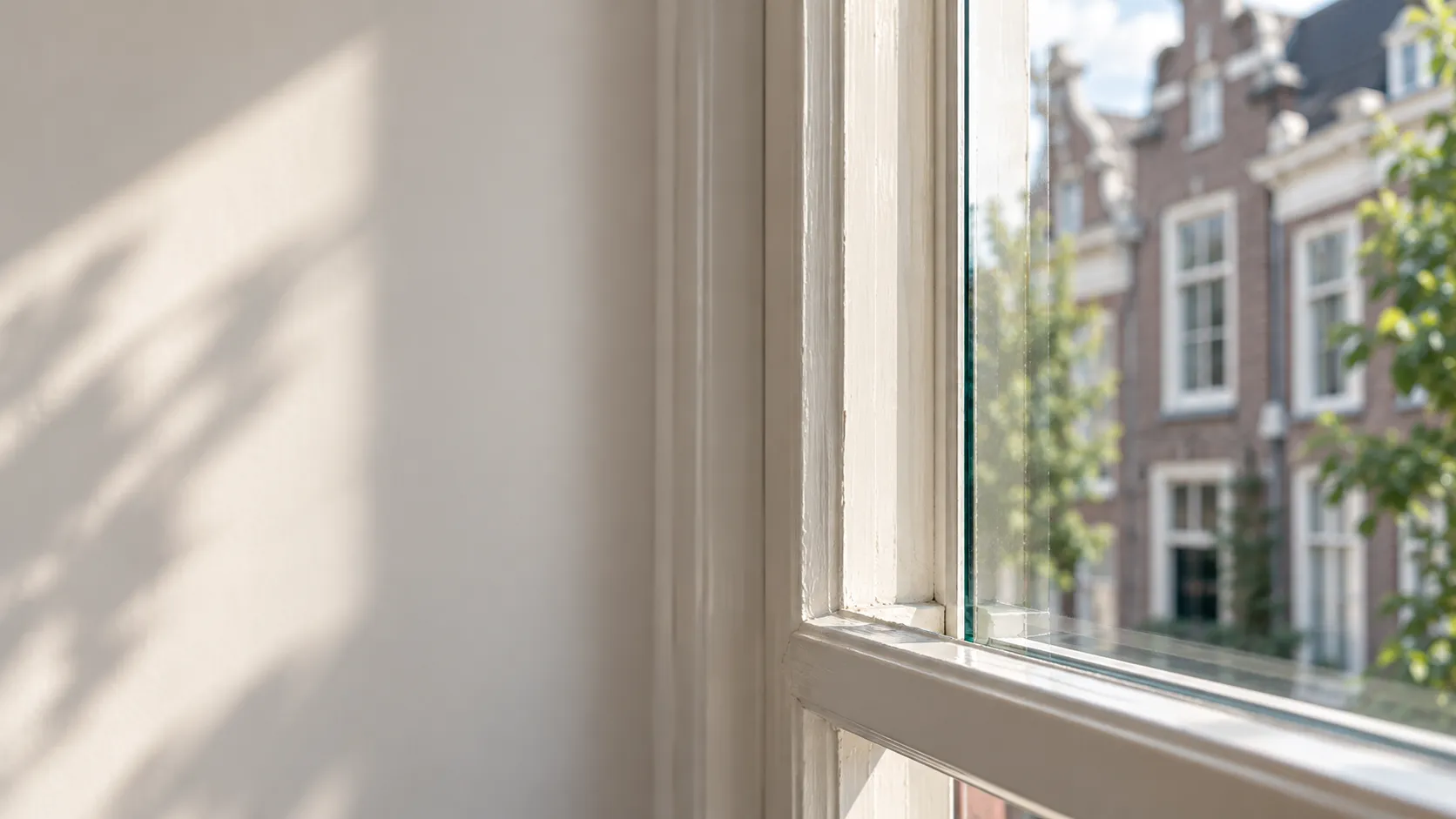
Custom glass
Vacuum glass.
BENGglas (LandVac) is the thinnest and lightest vacuum glass in the world — a U-value down to 0.35 W/m²K in just 6.7 mm. Ideal for monuments, slim frames and renovation. Choose your variant below and configure it to measure.
BENGglas — all variants
 U 0.40–0.50
Single Coated
One low-e coating — a good balance between light and insulation.
 U 0.40
Double Coated
Two low-e coatings — excellent heat rejection.
 U 0.35
Triple Coated
Three coatings — the lowest U-value in the range.
 U 0.50
Monu
Extra clear heritage glazing — maximum light transmission for listed buildings.
 U 0.50
Monu Restover
Heritage glazing with the authentic look of old window glass.
 U 0.50
Solar Control
Maximum solar control with a very low g-value.
 U 0.50
Sun
Light transmission and heat rejection tailored to your project.
More custom glass
What is vacuum glass?
In short
- Thickness from6,7 mm
- U-value up to0,35
- Variants7
- Applicationmonument · renovation
Vacuum glass consists of two glass panes with a vacuum layer of less than a millimetre between them. That vacuum insulates exceptionally well: in just 6.7 mm you achieve a U-value down to 0.35 W/m²K — comparable to or better than triple glazing, but much thinner and lighter.
This makes it ideal for monuments and slim, existing frames where thick insulating glass doesn't fit. You keep the authentic appearance and get modern insulation.
How does vacuum glazing work?
Vacuümglas bestaat uit twee glasbladen met daartussen een luchtledige ruimte van ongeveer 0,3 mm. Warmte verplaatst zich via lucht of gas; is er niets meer om die warmte door te geven, dan valt geleiding en convectie in de spouw vrijwel volledig weg. Waar HR++ en triple glas een brede spouw met argon of krypton nodig hebben om te isoleren, doet een vacuüm hetzelfde werk in een fractie van de ruimte.
Om te voorkomen dat de atmosferische druk de twee bladen tegen elkaar duwt, staat er een raster van micro-afstandhouders tussen. Dat zijn de fijne stipjes die u van dichtbij ziet; op kijkafstand vallen ze weg. De randen zijn hermetisch dichtgesmolten, waardoor het vacuüm behouden blijft.
Vacuum glazing compared with single, HR++ and triple glazing
The lower the U-value, the less heat escapes through the pane. Our vacuum glazing comes close to — and sometimes beats — what triple glazing achieves, but in a package that fits an existing frame.
The practical difference is thickness and weight. Triple glazing is easily 36 to 44 mm thick and weighs over 30 kg per square metre; our thinnest vacuum glazing is 6,7 mm and weighs about 16,0 kg/m². That means you usually do not have to rout out the rebate, and existing hinges and hardware stay within their weight limits.
All variants and specifications
We supply the complete BENGglas range (LandVac). The variants differ in the number of low-e coatings and therefore in the balance between insulation, light transmission and solar control:
| Variant | Thicknesses (mm) | U-value | Light transmission | g-value | Max. size (mm) |
|---|---|---|---|---|---|
| Single Coated | 6,7 · 8,3 · 10,3 · 12,3 · 16,3 | 0,40–0,50 | 78 % | 0,58 | 2350 × 4150 |
| Double Coated | 8,3 · 10,3 · 12,3 · 16,3 | 0,40 | 70 % | 0,39 | 2350 × 4150 |
| Triple Coated | 8,3 · 10,3 · 12,3 · 16,3 | 0,35 | 68 % | 0,33 | 2350 × 4150 |
| Monu | 8,3 · 10,3 · 12,3 · 16,3 | 0,50 | 83 % | 0,68 | 2350 × 4150 |
| Monu Restover | 8,3 · 10,3 | 0,50 | 75 % | 0,60 | 1500 × 2500 |
| Solar Control | 10,3 · 12,3 · 16,3 | 0,50 | 45 % | 0,29 | 2350 × 4150 |
| Sun | 14,0 | 0,50 | op maat | op maat | 1500 × 2500 |
U-value in W/m²K according to the BENGglas datasheets. Light transmission (LTA) and g-value apply to the bare vacuum pane; a laminated or hybrid second pane changes them slightly.
Which variant suits your situation?
- Listed building or authentic look — choose Monu or Monu Restover. Monu is extra clear and lets in the most light; Restover has the slightly irregular look of old window glass.
- Lowest possible U-value — Triple Coated, with U 0,35 the best insulation in the range.
- South-facing sun or a lot of glass — Solar Control keeps out the most heat; Double Coated sits in between in terms of solar control.
- Ordinary living situation — Single Coated gives the best balance between light and insulation and is the most chosen variant.
- Noise from a busy road — the bare pane achieves Rw 36 (-2;-3) dB; with a laminated or hybrid second pane that rises further. You choose this in the configurator.
Ordering vacuum glazing and having it fitted
You put your pane together yourself: variant, thickness, size and optionally a laminated or hybrid second pane. The price appears straight away — no quotation process. What you need to know beforehand:
- After production, vacuum glazing can no longer be cut or drilled : the vacuum and the edge seal would be lost. So measure accurately — if in doubt, we will measure with you.
- Sizes range from 200 × 230 mm up to a maximum of 2350 × 4150 mm, depending on variant and thickness. A minimum billable area applies of 0,3 m².
- Shaped panes and circles are possible at a surcharge; the configurator calculates this automatically.
- Top 2500 mm on one side, the pane travels by special transport — the transport rate then follows on request.
- Fitting is done in a dry, ventilated rebate according to the installation instructions; you will find these as a PDF on every variant page. Rather not do it yourself? We arrange the installation.
Still torn between vacuum glazing and HR++ or triple? Work out your situation with the U-value calculator, or view the complete range above — thicknesses from 6,7 up to 16,3 mm.
This is how you put together your custom glass
Click through the configurator yourself — in a minute you will see how you go from idea to order, to the millimetre and with the right price straight away.
- 1
Choose your glass
Select your glass type, color/design and thickness. You can immediately see the price per m².
- 2
Choose the shape
Rectangle or a special shape (circle, oval, oblique corner). You will immediately see any shape surcharge.
- 3
Enter your measurements
Width × height in mm — always give the glass size, not the rebate size. We make exactly what you enter.
- 4
Edits as desired
Edge finishing (from standard cutting edge to polished, miter or bevel) and bores, recesses and rounded corners.
- 5
Immediately the price, ordered safely
Live price (incl./excl. VAT) with all surcharges, a free safety check and then insured shipping.
Frequently asked questions about vacuum glass
What exactly is vacuum glass and how does it work?▾
Vacuum glass is the latest generation of insulating glass. Instead of a cavity with gas (as in HR++), there is a completely vacuum space between the two wafer-thin glass plates: a vacuum. Because there is no air or gas to conduct heat, the insulation value is extremely high. The result is a pane as thin as single glass that insulates better than the thickest triple walls.
Why are there small dots in the vacuum glass?▾
Up close you can see a tight pattern of tiny dots: the micro-spacers or spacers. Because the space between the glass plates is vacuum, an enormous atmospheric pressure is created that pulls the plates together. These dots ensure that the plates do not touch each other and the window does not implode. From a short distance they are hardly noticeable. Curious what that looks like? View our knowledge base article on BENG glass with examples and photos.
What is the advantage of vacuum glass over triple glass?▾
The biggest advantage is the thickness and weight. Triple glazing is easily 40 to 50 mm thick and very heavy, so it often does not fit into existing window frames. Our vacuum glass is on average only 8 to 12 mm thick and therefore almost always fits directly into your current wooden, plastic or aluminum frames — and even in monumental buildings. You save on your energy bill without replacing all your window frames.
Is vacuum glass suitable for monuments or historic buildings?▾
Yes, excellent. Precisely because vacuum glass is so thin, it is the solution for monumental buildings. Often the appearance should not change and the slim frames are not suitable for thick, heavy HR++ or triple glazing. With vacuum glass you retain the authentic, sleek appearance and enjoy modern comfort and insulation. Because renovation of monuments is tailor-made and complies with strict rules, we are happy to help you from the start - please feel free to contact us.
Can I order vacuum glass in any size?▾
Because vacuum glass is vacuumed under high pressure and the micro-spacers must be positioned exactly, production requirements apply to the dimensions. The maximum plate size for our BENG glass is 2350 × 4150 mm. In the configurator you can immediately see whether your measurements fall within the margins. Please note: vacuum glass cannot be sawn or processed after production, so accurate measuring is crucial. View our measuring instructions in the knowledge base.
Now on sale
More about insulation & vacuum glass
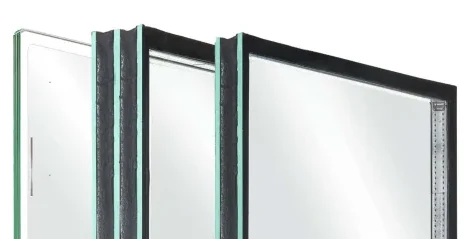
Compare insulating glass: HR++, triple or vacuum glass?
HR++, triple and vacuum glass compared for insulation, thickness, price, frames and subsidy, so that you choose the right insulating glass for your home.
Read more →
Heritage glass or vacuum glazing for old frames?
Monument glass or vacuum glass for old window frames? Difference in insulation, thickness, appearance and price — plus when you make which choice is best.
Read more →
ISDE subsidy for insulating glass: this is how it works
ISDE subsidy for HR++, triple and vacuum glazing: amounts, U-value requirements, the reporting code and how to apply. Have it fitted first, then claim.
Read more →We'll help you choose
Not sure which glass or thickness you need? Read our measuring and choice guides, or get in touch — we're happy to help before you order.