
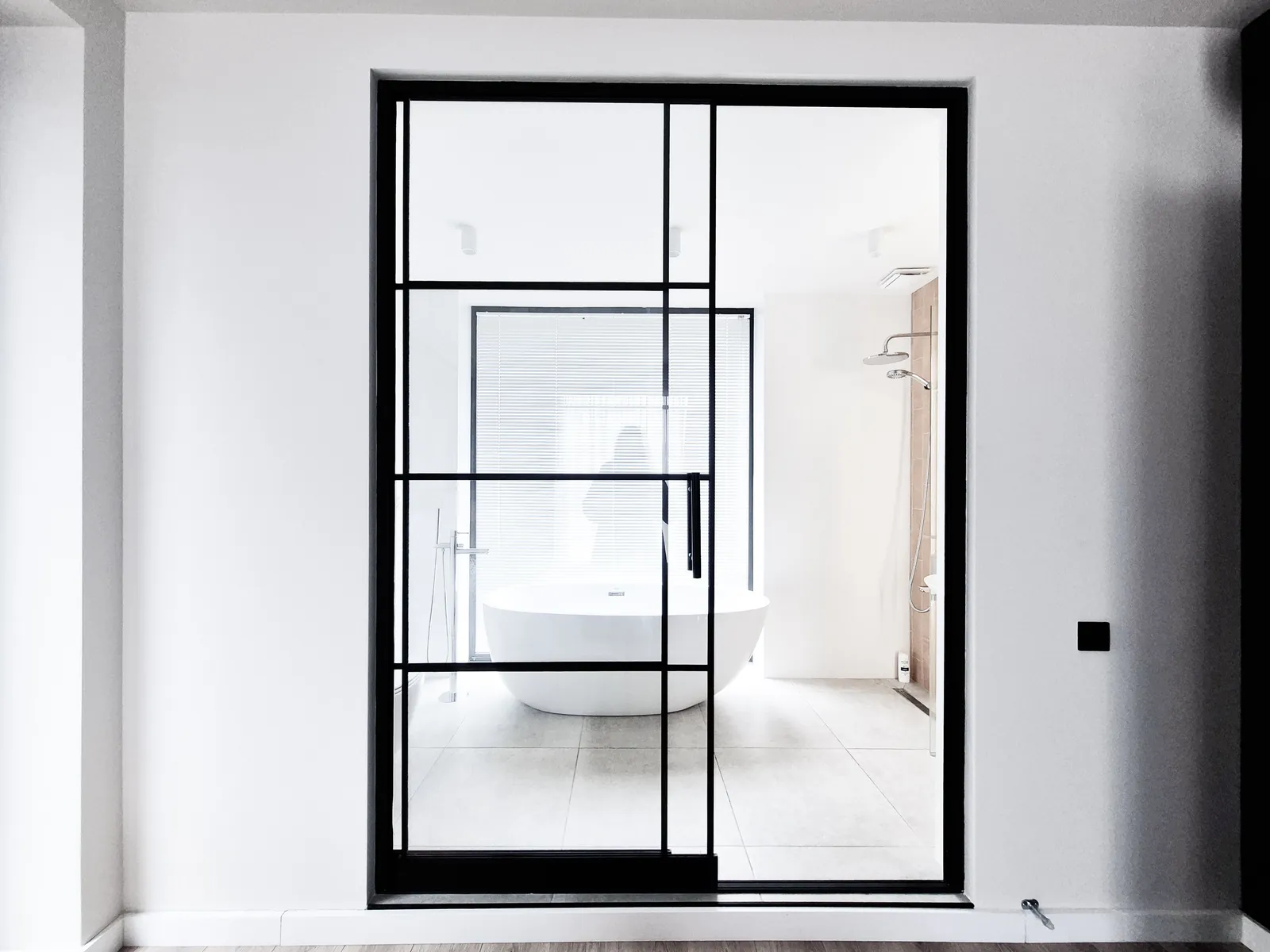
Glass that starts low to the floor can be dangerous. Someone could hit it, fall through it, or get seriously cut if the glass breaks. That is why safety glass, such as laminated glass or tempered glass, is often used in risk areas.
The short rule: does glass start lower than about 85 cm from the floor, is it in a door or is there a risk of falling through? Then safety glass is usually sensible and often necessary. In this article we explain in plain language when to use safety glass, what the 85 cm rule means and which type of glass to choose per situation.
Rule of thumb: low glass, glass in a door or risk of falling through = safety glass. Tempered glass breaks safely into small grains; Laminated glass remains closed and in place if broken.
Why is low glass extra risky?
You are not likely to hit a window that is high in the wall with your body. But glass that starts low is in the area where people walk, trip, play or fall into. Consider:
- windows to the floor
- low living room fronts
- glass next to doors and front doors with glass
- sliding doors
- glass along stairs
- glass in children's rooms
- glass on balconies or voids
If such a pane of normal glass breaks, large sharp shards are created. This can cause serious injury. That is why injury-safe glass is used in such places.
What does "glass under 85 cm" mean?
By glass below 85 cm we mean glass that starts lower than approximately 85 cm above the floor. So it concerns the height of the bottom of the glass compared to the floor level.
| Situation | Is safety glass wise? |
|---|---|
| Window starts at 120 cm height | Usually less risky |
| Window starts at 90 cm height | Depending on situation |
| Window starts at 60 cm height | Yes, often safety glass |
| Window extends to the floor | Yes |
| Glass next to a door | Yes |
| Glass in a door | Yes |
The idea is simple: the lower the glass is, the greater the chance that someone will fall against it.
Is that 85 cm a hard limit?
The 85 cm is often used as a practical limit for injury safety. In practice, you not only look at the exact height, but also at the use of the space. A window at a height of 90 cm can still be risky, for example if it is next to a staircase, in a school or in a busy walking route. Conversely, a small window at a low height in a technical room can pose less risk.
Therefore, always look at the combination of:
- height from the floor
- size of the window
- walking route and risk of bumps
- presence of children
- height difference behind the glass
- use of space (inside or outside)
When in doubt, choose safety glass.
What is safety glass?
Safety glass is glass that is less dangerous if broken than standard glass. Normal glass breaks into large sharp shards; safety glass limits that risk. The two best-known types are tempered glass and laminated glass. Both are safety glass, but they work differently. In tempered or laminated glass we compare the difference in detail.
Tempered glass with low glass
Tempered glass is extra strong glass. It is heated during production and then quickly cooled, making it stronger than normal glass. When tempered glass breaks, it shatters into small grains that are much less sharp than large shards. View the options for custom tempered glass.
Advantages of tempered glass:
- stronger than normal glass
- safer breaking behavior
- suitable for doors, shower walls and interior glass
- good resistance to impacts
- suitable for intensive use
Disadvantage: Tempered glass does not remain in place as a whole if broken, but falls apart. That is why tempered glass is not always sufficient when there is a risk of falling through.
Laminated glass by low glass
Laminated glass consists of two or more panes of glass with foil in between. If the glass breaks, the shards remain stuck to the foil. This is important if the glass should not fall open if it breaks. View the options for custom laminated glass.
Benefits of laminated glass:
- remains better in place if broken
- less chance of falling through
- suitable for low windows, sidelights and balustrades
- extra burglar-retardant
- can be combined with HR++ glass
For windows under 85 cm, laminated glass is often the most logical choice, especially when someone could fall through the glass.
Tempered or laminated glass: what do you choose?
The choice depends on the risk.
| Situation | Best choice |
|---|---|
| Shower enclosure | Tempered glass |
| Glass interior door | Tempered glass |
| Low window in living room | Laminated glass |
| Window to the floor | Laminated glass |
| Side light next to door | Laminated glass |
| Balustrade | Laminated or tempered-laminated glass |
| Roof glazing | Laminated glass |
| Table top | Tempered glass |
| Kitchen back wall | Tempered glass |
The simple rule: tempered glass breaks safely, laminated glass remains in place if broken. With low glass you often want to prevent someone from falling through the window. That is why laminated glass is usually the better choice.
Per situation: where do you need safety glass?
Windows to the floor
Floor-to-ceiling windows provide a lot of light and a spacious feeling, but they are in a clear risk zone. Someone can easily bump into it or fall. Safety glass is highly recommended for large glass fronts, French balconies, sliding doors, fixed windows next to garden doors, windows in children's rooms and glass walls in living rooms. Laminated insulating glass is often chosen here, so that you combine insulation with injury safety.
Glass in doors
Glass in doors is almost always a risk area. A door moves, can slam shut and is used often. Glass is found in front doors, back doors, interior doors, garden doors, sliding doors, pivot doors and shower doors. Tempered glass is often used for glass interior doors. Laminated glass is often more interesting for exterior or front doors, because it also has a burglar-retardant effect and holds together better if broken. You can find more about glass in doors in the category Doors.
Glass next to doors (sidelights)
We often call a window next to a door a side light. This glass is usually located in a walking route and often starts low to the floor, which makes it vulnerable. Someone can bump into the glass when entering, moving or playing. It is therefore preferable to use laminated safety glass for side lights. Examples: glass next to the front door or back door, a side window next to a sliding door, glass next to an interior door or an office entrance. Side lights are often overlooked, while normal glass can be unsafe here.
Glass on stairs
Glass on stairs requires extra attention: people can trip, fall or lean against the glass, and there is often a height difference. Safety glass is important for glass along stairs, at stairwells, next to landings, at voids, at glass balustrades and at low windows next to stairs. If there is a difference in height, you usually choose laminated or [tempered-layered] glass](/glas-op-maat/gehard-gelaagd-glas), so that the glass does not simply fall open if it breaks.
Balustrades
Balustrades are a separate category. This is not just about the risk of cutting, but above all about fall protection: a balustrade must prevent someone from falling down. Standard glass is never suitable for this. You look at height difference, glass size, glass thickness, number of glass layers, type of foil and the mounting system (glass clamps, point holders or profiles), indoors or outdoors. Laminated or toughened-laminated safety glass is often used; the correct structure depends on the construction. More about this in the category Balustrade and in glass clamps or point holders.
Children's rooms
Low glass is extra risky in children's rooms. Children play, run, fall or push against windows. Safety glass is wise for low windows, windows next to beds, windows near play areas, glass to the floor, balcony fronts and glass in doors. Laminated glass is often the safest choice, because it remains closed better if broken.
Is HR++ glass automatic safety glass?
No. This is a common mistake. HR++ glass is insulating glass: it says something about thermal insulation, not automatically about safety. A standard HR++ window can consist of normal glass plates that insulate well, but are still dangerous in risk areas if broken.
Do you want HR++ glass under 85 cm? Then choose a safety structure, for example:
- HR++ glass with laminated inner pane
- HR++ glass with laminated outer pane
- HR++ safety glass
- tempered or laminated insulating glass
This way you combine better insulation with injury safety.
Combine safety glass and insulation
In many homes you do not want to choose between safety and insulation, but both. This is possible with insulating glass in which one or more glass plates are designed as safety glass.
| Application | Possible solution |
|---|---|
| Low window | HR++ glass with laminated side |
| Side light next to door | Laminated HR++ glass |
| Front door | Laminated insulating glass |
| Window to the floor | Laminated HR++ glass |
| Balcony front | Laminated insulating glass |
| Roof glazing | Insulating glass with laminated inside |
The exact structure depends on the application and the risk.
When is safety glass mandatory?
Whether safety glass is mandatory depends on the situation, the building type and the applicable requirements. In the Netherlands, the NEN 3569 standard is often used for injury-proof glazing. This helps determine where safety glass is needed to limit injuries due to glass breakage.
For a homeowner, the practical translation is most important: safety glass is often necessary or wise for glass that is low, in doors, next to doors or through which someone can fall. Are you unsure about a project? Then have the situation assessed, especially with balustrades, stairs, height differences and public spaces.
What if existing glass below 85 cm is not safety glass?
Many older homes still have normal glass in places where you would previously use safety glass. This does not always mean that you have to replace everything immediately, but it is wise to consider the risk. Replacement is especially smart when:
- the glass needs to be replaced anyway
- have your HR++ glass installed
- there are children in the house
- the glass is in a door or side light
- people walk past it a lot
- the window is large
- there is a height difference behind it
- you want to make the home safer
Are you still ordering new glass? Then this is the time to take safety into account immediately.
Safety glass during renovation
When renovating, it is smart not to just look at insulation. Many people replace single glazing or old double glazing with HR++ glass, but forget about safety. When renovating, check:
- Does the glass start lower than 85 cm?
- Is the glass in a door?
- Is the glass next to a door?
- Is there a risk of falling through?
- Will the glass be in a children's room?
- Are there stairs or a loft nearby?
- Is the glass used intensively?
This prevents you from installing new insulating glass that insulates technically well, but is not safe enough in a risk location.
What thickness and structure do you need?
The correct structure depends on the application. A low window requires something different than a balustrade. Use the table below as a starting point; You can read more about thickness in which glass thickness.
| Application | Glass selection |
|---|---|
| Low window in home | Laminated HR++ glass |
| Side light next to door | Laminated glass or laminated insulating glass |
| Front door | Laminated insulating glass |
| Glass interior door | Tempered glass |
| Balustrade | Project-dependent laminated/tempered laminated glass |
| Roof glazing | Laminated glass |
| Shower enclosure | Tempered glass |
With balustrades, roof glazing and height differences, the glass structure must always be properly tailored to the situation.
Common mistakes with glass under 85 cm
- Thinking that thick glass is automatically safe — thick regular glass can still break into large sharp shards; Safety lies in the type of glass, not just its thickness.
- HR++ confuse glass with safety glass — HR++ glass insulates well, but is not automatically injury-proof.
- Only choose tempered glass if there is a risk of falling through — tempered glass shatters if broken; if there is a risk of falling through, you usually need laminated glass.
- Forgot side lights — glass next to doors is often overlooked, even though it is in a walking route.
- Consider safety only after ordering — for insulating glass, the safety structure must be selected in advance.
- Treat balustrades like normal glass — balustrades require special glass construction and attachment.
Checklist: do I need safety glass?
- Does the glass start lower than approximately 85 cm from the floor?
- Does the glass extend to the floor?
- Is the glass in a door?
- Is the glass next to a door?
- Can someone fall against the glass?
- Is there a height difference behind the glass?
- Is the glass along a staircase?
- Is it a children's room?
- Is the glass frequently touched or used?
- Is the glass part of a balustrade?
- Is the glass hanging above people?
- Do you want HR++ glass in a risk location?
Do you answer "yes" to one or more questions? Then safety glass is probably wise.
Conclusion
Glass below 85 cm from the floor is in a risk area: someone can more easily fall into it or fall through it. That is why safety glass is often wise in such places and necessary in many situations. Do not choose solely on the basis of insulation, because HR++ glass is not automatically safety glass.
For low windows, sidelights, doors and a risk of falling through, you often choose laminated glass or laminated insulating glass. Tempered glass is often suitable for shower walls and glass interior doors. The most important question remains: what happens if this window breaks? If there is a risk of injury, falling through or falling shards, choose safety glass.
Want to know more or get started right away?
- Discover the possibilities in the category Safety glass
- Compare the types in toughened or laminated glass
- Order your custom work easily via custom glass
Are you unsure about the right structure for your situation? If in doubt, have it assessed, especially in the case of balustrades, stairs and fall hazards.