
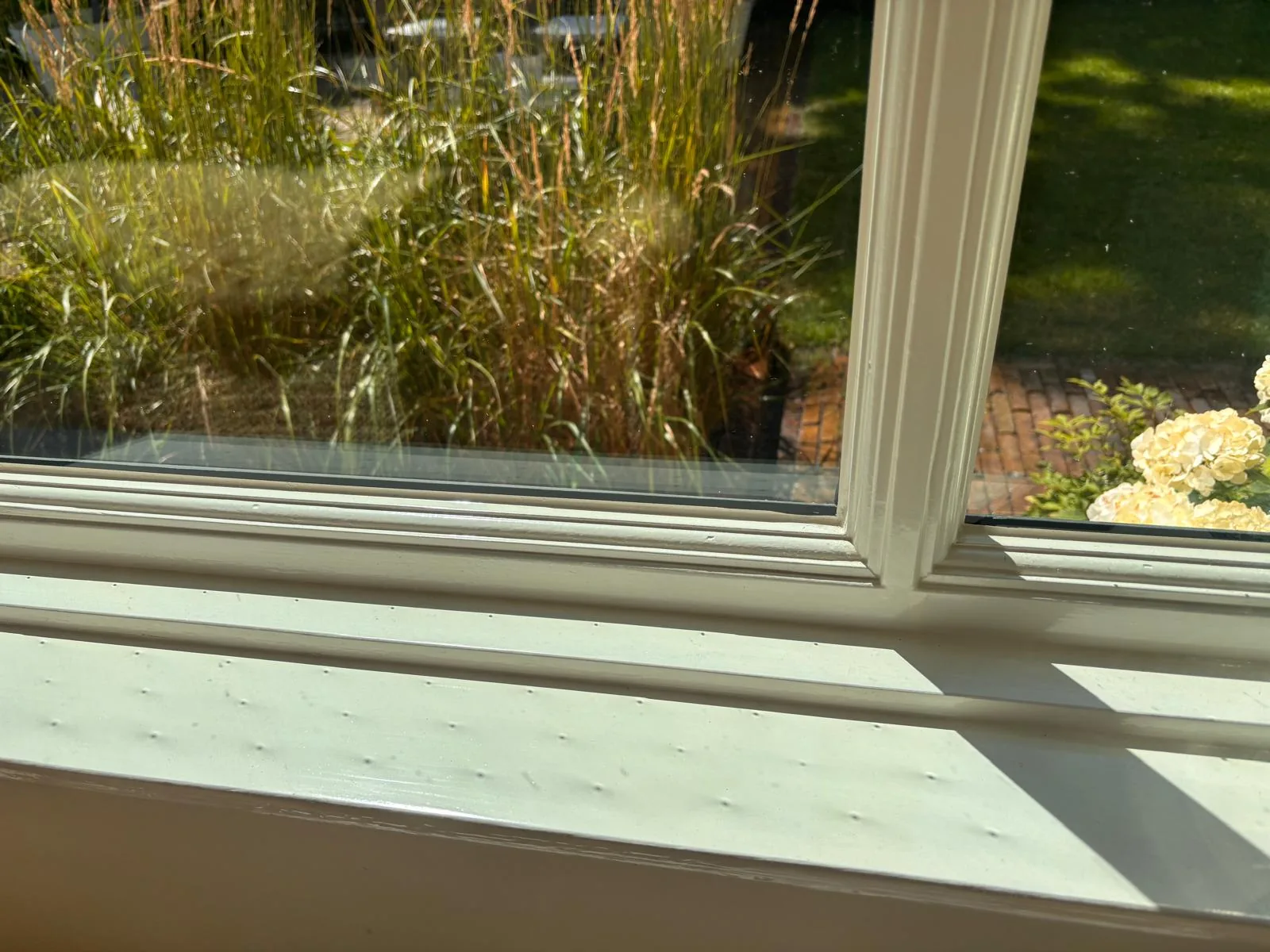
Vacuum glass is one of the smartest solutions for those who want better insulation without installing thick window frames. The glass is much thinner than triple glass, but still insulates excellently. This makes vacuum glass especially interesting for old wooden frames, monumental buildings and renovations where you want to preserve the existing appearance.
Yet vacuum glass also raises questions. If you look at the glass up close, you can sometimes see small dots between the glass plates or a small cap in the corner. That may seem strange if you don't expect it. In this article we explain what vacuum glass looks like in practice, why those dots are needed, what the vacuum valve does and when vacuum glass is a good choice.
What is vacuum glass?
Vacuum glass is insulating glass where there is no wide cavity with gas between the glass plates, but an extremely thin vacuum space. This airless space makes it much more difficult for heat to escape outside.
Normal insulating glass, such as HR++ glass, works with a cavity filled with noble gas. Triple glazing even uses two cavities. This makes the windows thicker. Vacuum glass works differently: because the vacuum is so thin, the total glass thickness remains limited. Depending on the type, vacuum glass is often about 8 to 12 mm thick. That makes it much slimmer than triple glass.
That is why vacuum glass is often chosen for:
- old wooden frames;
- monumental buildings;
- renovation projects;
- narrow rebates;
- homes where HR++ glass is too thick;
- situations where the existing window frames must be retained.
Why is vacuum glass so thin?
The insulating effect of vacuum glass is due to the vacuum between the glass plates. There is virtually no air in a vacuum, making it difficult for heat to move via air flow. With HR++ and triple glazing, space is required for an insulating cavity; with vacuum glass that space is almost not necessary. This allows the glass to remain thin and still insulate well.
That is exactly why vacuum glass is interesting for existing window frames. Where HR++ glass or triple glass is sometimes too thick, vacuum glass often fits. Are you unsure whether thicker glass fits your frame? Then read will thicker glass fit in my frame.
What does vacuum glass look like?
From a normal viewing distance, vacuum glass looks very similar to ordinary insulating glass: you see a clear window with good insulating properties. Up close you can see a few technical features:
- small micro-spacers between the glass plates;
- sometimes a small vacuum valve in a corner;
- sometimes a thin edge or absorption strip;
- a slightly different reflection than with standard glass.
These features belong to the product. They do not mean that the glass is damaged or incorrectly produced.
What are the dots in vacuum glass?
The small dots in vacuum glass are called micro-spacers: tiny spacers between the two glass plates. They are necessary because there is a vacuum in the window. This vacuum creates pressure on the glass plates; without spacers the glass plates would be pulled together. The micro spacers keep the glass plates at the correct distance from each other. You can see them as small points of support in the diamond, which are usually arranged in a regular grid.
Are the micro-spacers clearly visible?
That depends on the viewing distance, light and background. You can usually see the dots up close, especially if you stand with your nose close to the glass or look against a calm, light background. From a normal viewing distance they are much less noticeable. In a living room, bedroom or office you usually look outside through the glass, so that the dots visually largely disappear into the environment.
| Viewing distance or situation | Visibility micro spacers |
|---|---|
| Less than 50 cm | Often visible |
| 1 meter | Sometimes visible when looking closely |
| 2 meters or more | Usually barely noticeable |
| In busy outdoor background | Often almost invisible |
| With a uniformly light background | Slightly more visible |
So it is normal to see them up close. That is part of the vacuum glass technology.
Are the dots a production error?
No. The dots are not damage, dirt or production errors. They are a necessary part of vacuum glass: without micro-spacers the glass would not work properly technically, because the glass plates must remain at a controlled distance from each other.
Anyone who sees vacuum glass for the first time may be shocked by the dot pattern, especially if the window is still loose and you look at it up close. After installation it is usually much less noticeable.
Always only judge vacuum glass when it has been placed and you look at it from a normal distance — not loose in the packaging.
What is the vacuum valve?
With some types of vacuum glass you will see a small cap or valve in one corner: the vacuum valve. During production, air is removed from the space between the glass plates through this point. The valve is then closed so that the vacuum is maintained. Not every type of vacuum glass has a visible valve; some versions are produced differently and do not have a visible cap.
Can you see the vacuum valve after installation?
In many cases not. With glass in a frame, the edge of the window falls behind the glazing beads, putty or the profile, usually causing the valve to disappear from view. The valve may be visible when:
- the glass does not fall deep enough into the frame;
- the glass edge remains visible;
- the glass is used as interior glass;
- the frame has a very shallow rebate;
- the glass is used free-standing.
For standard window frames, the valve is usually not a problem. For applications where the glass edge remains visible, it is wise to carefully choose in advance which type of vacuum glass you use.
When do you choose vacuum glass without a visible valve?
A version without a visible valve is especially interesting when the edge of the glass remains visible. Consider:
- glass interior doors;
- interior glass;
- very shallow window frames;
- monumental windows with narrow glazing beads;
- situations where every detail remains visible.
With ordinary windows, a visible valve is often not a problem, because it disappears behind the glazing bar. For visible work, a valveless version may be more attractive.
What is an absorption strip?
Some types of vacuum glass have a small absorption strip or edge zone. This helps to maintain the quality of the vacuum and the lifespan of the glass. This strip is usually located on the edge of the glass and often disappears into the rebate or behind the finish after installation. This is also not a fault, but a technical part of the product.
Vacuum glass vs. HR++ glass
| Attribute | HR++ glass | Vacuum glass |
|---|---|---|
| Thickness | Often 24-28 mm | Often 8-12 mm |
| Insulation | Good | Very good |
| Fits in old window frames | Sometimes | Often yes |
| Price | Lower | Higher |
| Ideal for | Standard renovation | Narrow or monumental window frames |
| Visible technical features | Hardly | Micro-spacers, sometimes valve |
| Frame adjustment needed | Sometimes | Less often |
HR++ glass is often the best choice if you have enough space in the frame. Vacuum glass is especially interesting when you have little space or want to keep the existing frames. Do you want to compare the insulation values? Then use the u-value calculator. If you opt for double glazing, you can assemble your window via HR++ assembling insulating glass.
Vacuum glass vs. triple glass
| Attribute | Triple glass | Vacuum glass |
|---|---|---|
| Thickness | Often 36-42 mm | Often 8-12 mm |
| Weight | High | Lower |
| Insulation | Very good | Very good |
| Fits in existing frame | Often not | Often yes |
| Suitable for monuments | Usually not | Often yes |
| New window frames needed | Often yes | Often not |
| Appearance of existing window | Changes often | Better preserved |
Triple glazing is especially suitable for new construction or when you install new window frames. Vacuum glass is actually strong for renovation. Do you want custom triple glazing? You can put this together via compose triple glass.
When is vacuum glass a good choice?
Vacuum glass is especially a good choice if you want to insulate well without major adjustments to the frame. Choose vacuum glass when:
- HR++ glass is too thick;
- triple glass does not fit;
- you want to keep old wooden frames;
- you have a monumental building;
- you find the appearance of the window important;
- you want less heat loss;
- you don't want thick slats;
- you want to combine renovation with comfort improvement.
For standard modern window frames, HR++ glass is often cheaper. For narrow window frames, vacuum glass can be the better solution.
When is vacuum glass less suitable?
Vacuum glass is not always automatically the best choice. It makes less sense when:
- HR++ glass fits easily;
- the budget is limited;
- you install new window frames and triple glazing is possible;
- you don't want visible micro-spacers;
- the glass is used as completely free-standing interior glass;
- the edge remains completely visible and a valve could be visible.
Vacuum glass is therefore especially strong as an insulating renovation solution, not as standard glass for every situation.
Common misunderstandings about vacuum glass
- "The dots do not belong." The micro spacers belong to vacuum glass. They are necessary to keep the glass plates at a distance.
- "The cap means the glass is broken." A small valve in the corner is normal for some types. It is part of the production.
- "Vacuum glass is the same as triple glass." No. Triple glass is thick and works with three glass plates and cavities. Vacuum glass is thin and works with an airless space.
- "Vacuum glass always fits." Vacuum glass often fits narrow window frames, but you still need to check the size, rebate depth and edge details.
- "You always see the dots very clearly." You can see them up close. From a normal distance they are usually much less noticeable.
What should you pay attention to before ordering vacuum glass?
Always check these points:
- What is the available rebate depth?
- Does the glass edge fall completely behind the glazing bead?
- Will a possible valve be visible later?
- Is the frame still in good condition?
- Is there enough space for glazing tape and sealant?
- Do you want to keep the original look?
- Is it a monumental building?
- Is HR++ glass perhaps also possible?
- Is professional installation necessary?
- Do you want to apply for a subsidy?
With vacuum glass, checking carefully in advance is extra important. The product is technically high-quality and custom-made. An error in sizing or execution can be costly. Do you measure yourself? Then follow the steps in measure glass.
How do you rate vacuum glass after delivery?
Do not just view vacuum glass loose in the packaging. A loose window looks different from an installed window. When assessing, please note:
- viewing distance;
- light;
- background;
- position of the valve;
- placement in the frame;
- visibility of the glass edge.
Many technical features largely disappear after installation, especially when the window is placed in a traditional frame with glazing beads.
Conclusion
Vacuum glass is an excellent solution for those who want good insulation without thick windows or new window frames. It is thin, insulating and therefore particularly suitable for old wooden frames, narrow rebates and monumental buildings. The small dots are micro-spacers: they are part of the product and ensure that the glass plates remain at a distance. A small vacuum valve in the corner can also be normal for some types and often disappears behind the glazing beads.
Do you want to order vacuum glass? Then look not only at the insulation value, but also at the rebate depth, visibility of the glass edge, presence of a valve and the appearance after installation. Find out more about will thicker glass fit in my frame or the difference between tempered and laminated safety glass.
Ready to choose? View the vacuum glass for your renovation, put together HR++ insulating glass or calculate your insulation value with the U-value calculator.