
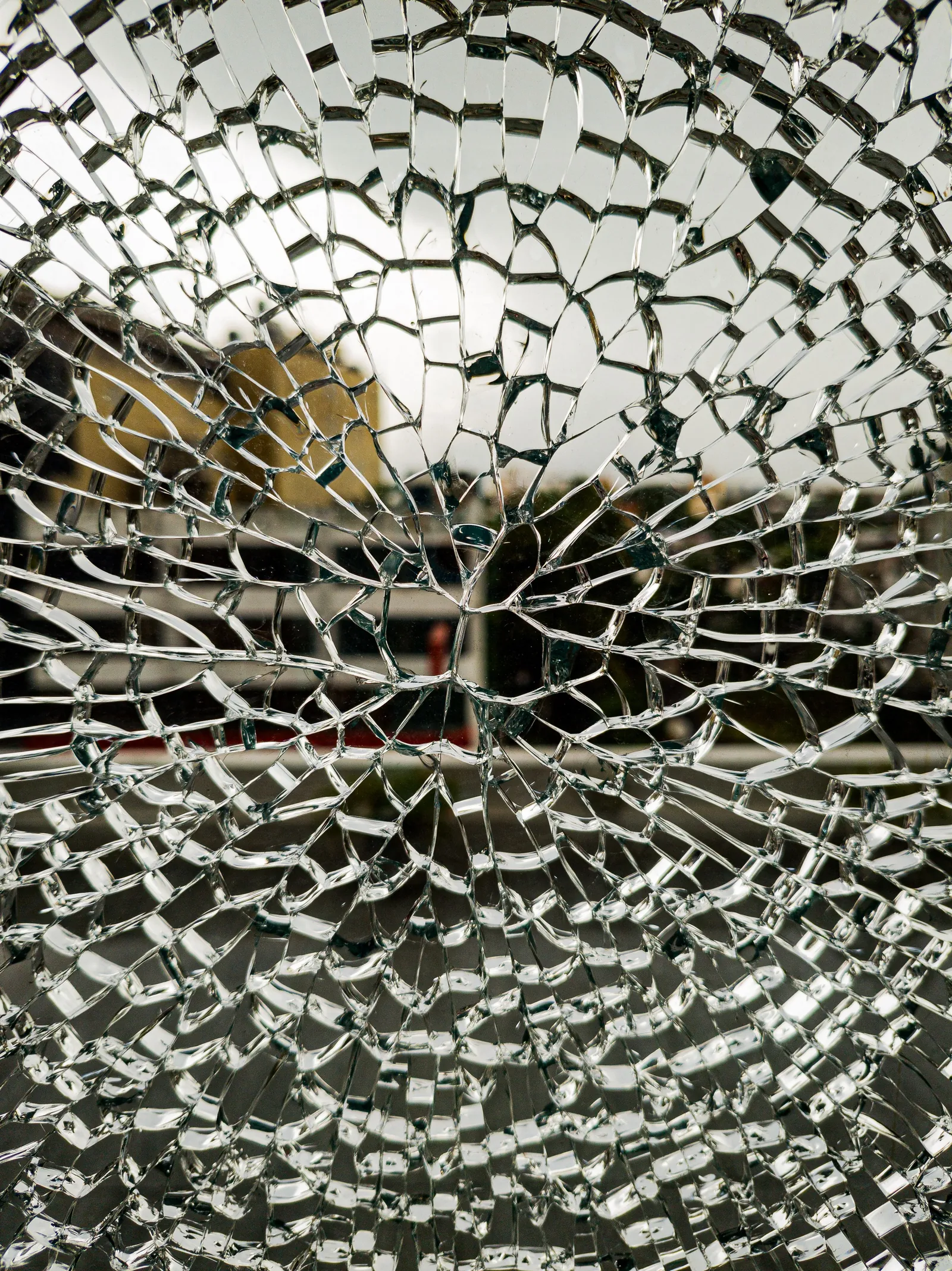
Tempered glass is safety glass that is much stronger than normal glass. It is used in places where glass must be able to withstand impacts, temperature differences or daily use: shower walls, glass doors, table tops, kitchen back walls and glass furniture. The short rule is simple: choose tempered glass (ESG) when glass needs to be stronger and break into small, less sharp grains.
However, tempered glass is not suitable for every application. For balustrades, roof glazing and situations with a risk of falling through, laminated glass is often more important. In this article, we explain exactly what tempered glass is, how strong it is, how it breaks, when to use it, and what to look for when ordering — including thickness guidelines, edge finishes, and common mistakes.
What is tempered glass?
Tempered glass is glass that receives a special heat treatment during production. The glass is heated strongly and then cooled quickly. This process creates tension in the glass, making it much stronger than standard float glass. Tempered glass is therefore also called thermally toughened glass.
The main difference with ordinary glass is in the break behavior. Normal glass breaks into large, sharp shards. When broken, tempered glass shatters into small grains, which are much less dangerous than long shards of glass. That is why tempered glass falls under safety glass.
How strong is tempered glass?
Tempered glass is much stronger than regular glass of the same thickness. It can withstand impacts, bending and temperature differences better. This makes it suitable for applications where glass is used intensively, such as:
- Shower walls
- Glass doors
- Table tops
- Kitchen back walls
- Glass shelves
- Showcases and counters
- Glass walls and furniture
- Catering and retail applications
Please note: tempered glass is stronger, but not unbreakable. A hard blow to a corner or edge can still cause breakage. Glass edges always remain the most vulnerable point.
How does tempered glass break?
When tempered glass breaks, it shatters into small pieces that resemble glass granules or granules. This is safer than regular glass, because large, sharp shards are not created. Yet this also means something important: tempered glass does not remain in one piece if broken. The window completely falls apart.
Tempered glass breaks safely into small grains, but the window does not stay closed — it shatters. This is a problem if there is a risk of falling through (balustrades, roof glass, glass above people): choose laminated glass or tempered-laminated glass, which remains attached to the foil.
When do you use tempered glass?
Tempered glass is mainly used when glass must be strong, safe and resistant to use. For interior glass that is frequently touched, it is usually a logical choice.
| Application | Why tempered glass? |
|---|---|
| Shower enclosure | Resistant to impacts and temperature differences |
| Glass door | Safe for intensive use |
| Table top | Stronger and safer in case of breakage |
| Kitchen back wall | Better resistance to heat |
| Glass plate at stove | Better resistance to temperature differences |
| Glass shelf | Stronger under load |
| Display glass | Safer against touch and impact |
| Counter glass | Suitable for intensive use |
| Interior wall | Sleek and secure solution |
Tempered glass for shower walls
Shower walls are almost always made of tempered glass. Shower glass is used daily and has to deal with moisture, heat and impacts. A shower enclosure must be resistant to:
- Temperature differences
- Touch and cleaning
- Water pressure
- Mounting with profiles or fittings
- Daily opening and closing of doors
Commonly used thicknesses for shower glass are 8 mm and 10 mm. The edges are usually flat poly ground so they are smooth and safe. For shower glass, determine all holes, recesses and finishes in advance: after hardening you can no longer adjust the glass. You can read more about this in what you should pay attention to with a custom shower enclosure, and shower enclosures and fittings can be found in the shower & bath category.
Tempered glass for glass doors
Glass doors are often made of tempered glass. A door moves, is often touched and can fall closed - ordinary glass is too fragile and too dangerous for that. Tempered glass is used for glass interior doors, pivot doors, hinged and sliding doors, shower doors, cupboard doors and office walls.
With glass doors, pay close attention in advance:
- Glass thickness
- Hinge points
- Handle holes
- Lock recesses
- Direction of rotation
- Edge finishing
- Weight of the door
Because tempered glass can no longer be drilled or cut, all recesses must be exactly correct. Our glass doors are custom made.
Tempered glass for table tops
A glass table top must be able to withstand daily use: plates, glasses, laptops, toys, cleaning and minor impacts. Tempered glass is therefore often a good choice. Advantages:
- Stronger than normal glass
- Safer in case of breakage
- Suitable for daily use
- Sleek appearance and easy to clean
- Possible with ground or polished edges
A nice edge finish is important for table tops. flat poly cut glass is often chosen, because the edge is visible and touchable.
Tempered glass as a kitchen back wall
A kitchen back wall made of glass has to deal with heat, moisture, grease and cleaning products. Temperature differences are especially important behind a hob. That is why tempered glass is often used for this. Tempered glass is suitable behind an induction, ceramic or electric hob, a sink, a worktop or as a kitchen wall.
You have to be extra careful with gas stoves. Due to open fire and high temperature differences, not every glass structure can be used safely. Keep sufficient distance and choose a suitable version.
Can tempered glass withstand heat?
Tempered glass can withstand temperature differences better than regular glass. This makes it suitable for kitchen back walls or glass near a stove. But tempered glass is not the same as heat-resistant ceramic glass. Other glass may be necessary for extremely high temperatures, direct fire or special stove applications.
So do not simply use tempered glass for:
- In a stove
- Open fire
- Oven windows
- Fireplace doors
- Industrial heat
- Extreme temperature applications
For such situations you need special heat-resistant glass.
Can you make tempered glass to size?
Yes, but all operations must be done before hardening. This means that you must determine in advance:
- Exact width and height
- Glass thickness
- Edge finishing
- Rounded corners
- Drill holes and recesses
- Hinge and handle holes
- Shape of the glass
After hardening, the glass can no longer be cut, ground or drilled. This is one of the most important points with tempered glass. You therefore compile your dimensions and operations in advance via custom glass: in the configurator you immediately choose drillings, recesses, corner finishing and edge finishing, so that everything is correct before hardening.
Why can you no longer cut tempered glass?
The hardening process places the glass under tension. This tension makes the glass strong, but also ensures that it can no longer be processed. If you try to cut or drill tempered glass, it breaks into small grains almost immediately.
Therefore, when ordering, check extra carefully whether all sizes and holes are correct. With custom-made glass, one mistake in a hole position or recess usually means that the window has to be reproduced.
Which edge finish do you choose for tempered glass?
Because tempered glass is often visible and touchable, a neat edge finish is usually chosen.
| Edge finishing | Application |
|---|---|
| Rounded sharp edges | If edge is partially protected |
| Flat ground | Neat straight edge |
| Flat poly cut | Nice smooth visible edge |
| Facet cut | Decorative application |
| Rounded corners | Extra safe for interior glass |
With tempered glass, the edge is skimmed off as standard before tempering — so that is always included. Do you want a visible, smooth edge? Then choose the polished finish (platpoly) when putting together. For shower walls, table tops and glass doors, flat poly cut is usually the nicest and safest choice. More information can be found under edge finishing: sharp edges or ground.
What thickness of tempered glass do you need?
The correct glass thickness depends on the application and size.
| Application | Commonly used thickness |
|---|---|
| Small glass plate | 4-6 mm |
| Kitchen back wall | 6 mm |
| Table top on existing table | 6-8 mm |
| Separate table top | 10-12 mm |
| Shower enclosure | 8-10 mm |
| Glass door | 8-10 mm |
| Glass shelf | 6-10 mm |
| Interior wall | 10-12 mm |
These are general guidelines. For large dimensions, heavy loads or special mounting, a different thickness may be required. See also what thickness of glass do you need.
Is tempered glass the same as safety glass?
Tempered glass is a form of safety glass, but not all safety glass is tempered glass. The two main types of safety glass are tempered glass and laminated glass. Tempered glass breaks into small grains; Laminated glass remains attached to a foil when broken.
| Property | Tempered glass | Laminated glass |
|---|---|---|
| Breaking behavior | Falls into small grains | Sticks to foil |
| Good luck | High | Depending on structure |
| Remains close to break | No | Yes |
| Suitable for shower wall | Yes | Sometimes |
| Suitable for balustrade | Not as a single plate | Yes |
| Post-edit | No | Usually not wise |
Tempered glass is ideal for many interior applications. For fall protection, you usually choose laminated glass. You can read the full difference in tempered or laminated glass.
When is tempered glass not suitable?
Tempered glass is not always the right choice. Do not only use tempered glass for:
- Balustrades
- Roof glazing
- Glass above people
- Situations with a risk of falling through
- Floor glazing
- Windows where the glass must remain closed in case of breakage
- Applications with high safety requirements
In those situations, laminated glass is often necessary, sometimes in combination with tempered glass. This is then called tempered-laminated glass.
What is tempered-laminated glass?
Tempered-laminated glass combines the properties of tempered glass and laminated glass. It consists of two or more tempered glass plates with foil in between. This makes it strong and holds together better if broken. It is used in heavier safety applications, such as balustrades, glass stairs, floor glass, roof glass, heavy glass constructions and situations with a risk of falling through.
This is more specialist glass than standard tempered glass. The correct structure depends on application, size and load.
Is tempered glass scratch-free?
No. Tempered glass is stronger than normal glass, but not scratch-free. The surface can still get scratched by sand, hard materials or improper cleaning. Prevent scratches by:
- Do not use a scouring pad
- Rinse away sand and dirt first
- Use soft cloths and suitable glass cleaner
- Do not use metal scrapers without experience
- Be careful with jewelry and hard objects
For table tops, you can use felt pads or coasters to reduce scratches.
Can you use tempered glass outside?
Yes, tempered glass can be used outdoors, provided the application and mounting are suitable. Think of wind screens, exterior walls, terrace partitions, verandas, glass doors and some balustrade constructions in combination with laminated glass.
For outdoor use, you must pay attention to wind load, mounting, glass thickness, edges, safety, weather influences, the material of the fittings and corrosion resistance. For outdoor balustrades, tempered glass alone is usually not sufficient — then laminated safety glass is needed.
Common mistakes with tempered glass
- Thinking tempered glass is unbreakable — it's stronger, but can still break. Corners and edges in particular remain vulnerable.
- Forgot Holes — all holes and recesses must be made before curing.
- Want to cut afterwards — tempered glass cannot be cut or drilled after production.
- Use tempered glass if there is a risk of falling through — you usually need laminated glass there.
- Choose the wrong thickness — glass that is too thin can be unsafe or unstable; choose the thickness appropriate for the application.
- Do not choose an edge finish — for visible or touchable edges, ground glass is important.
- Use plain glass for shower walls — shower glass must be safe and strong; tempered glass is usually the right choice here.
Checklist before ordering tempered glass
- What is the application?
- Is tempered glass suitable for this situation?
- Is there no risk of falling through?
- What thickness of glass do you need?
- Are the edges visible or touchable?
- What edge finish do you want?
- Are holes or recesses needed?
- Do corners need to be rounded?
- Are all measurements in millimeters correct?
- Is the glass intended for indoors or outdoors?
- Is special heat-resistant glass necessary?
- Could laminated glass be safer?
Conclusion
Tempered glass (ESG) is strong, safe and suitable for many applications where glass is used intensively: shower walls, glass doors, table tops, kitchen back walls, display cases and interior glass. Its biggest advantage is that it is stronger than regular glass and shatters into small, blunt grains when broken — safer than standard glass.
Please note: tempered glass cannot be adjusted after production. All dimensions, holes, recesses and edge finishes must be correct in advance. For balustrades, roof glass and fall hazards, tempered glass alone is usually not sufficient; then you are more likely to choose laminated glass or tempered laminated glass.
Do you want to read more or get started right away? View the difference in tempered or laminated glass, choose the right glass thickness and edge finish, or read about installation glass. Ready to order? Create your custom solution with custom glass or view the range safety glass.