
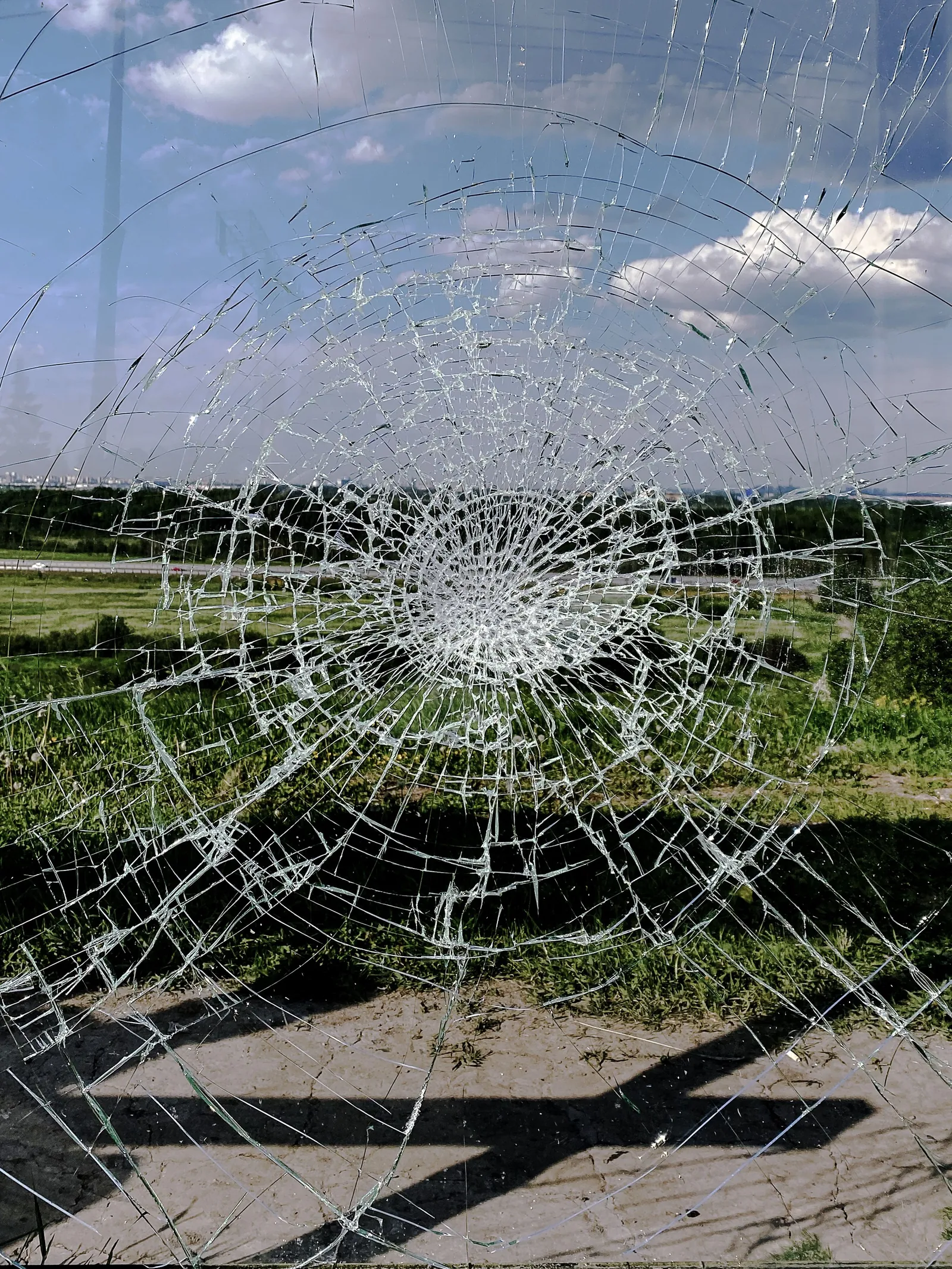
Laminated glass is safety glass that stays together if broken. It consists of two or more glass plates with a strong plastic foil in between. If the glass breaks, the shards stick to the foil. As a result, an open hole does not immediately form and the risk of serious injury is smaller. The short rule is: choose laminated glass (VSG) when the glass must remain in place if it breaks, for example with low windows, balustrades, roof glazing, side lights next to doors and situations with a risk of falling through.
Laminated glass is often confused with tempered glass or insulating glass. These are different types of glass with a different purpose. In this article we explain what laminated glass is, how it is constructed, when you use it and what you should pay attention to when ordering.
What is laminated glass?
Laminated glass consists of several layers of glass with one or more films in between. The foil holds the glass together if the window breaks. With normal glass, shards fall loose from the window. With laminated glass, the shards largely remain attached to the foil. The window may crack, but it will not immediately open completely.
That is why laminated glass is often used in places where safety is important. Examples are:
- Windows to the floor
- Low windows
- Side lights next to doors
- Front doors
- Balustrades
- Roof glazing and glass above people
- Stairwells and children's rooms
- Fall protection and burglar-resistant glass
How is laminated glass constructed?
The structure of laminated glass is often indicated with numbers, such as 33.1, 44.2 or 55.2. That seems complicated, but the system is quite logical. For example:
- 33.1 usually means 3 mm glass + 3 mm glass + 1 foil in between.
- 44.2 usually means 4 mm glass + 4 mm glass + 2 films in between.
The thicker the glass plates and the more foils, the stronger and heavier the glass usually becomes.
| Construction | Meaning | Total glass thickness (without foil) |
|---|---|---|
| 33.1 | 2 × 3 mm glass + 1 foil | 6 mm |
| 44.1 | 2 × 4 mm glass + 1 foil | 8 mm |
| 44.2 | 2 × 4 mm glass + 2 foils | 8 mm |
| 55.2 | 2 × 5 mm glass + 2 foils | 10 mm |
| 66.2 | 2 × 6 mm glass + 2 foils | 12 mm |
| 88.2 | 2 × 8 mm glass + 2 foils | 16 mm |
The foil itself also adds some thickness. The exact total thickness therefore depends on the type of foil and its structure.
Why is there foil between laminated glass?
The foil is the most important part of laminated glass. This ensures that the glass stays together when broken. The foil helps with:
- Injury limitation
- fall safety
- Burglary delay
- Noise reduction
- Protection against falling shards
- Extra strength
- Sometimes UV reduction
Without foil, the glass would fall into loose shards if broken. With foil, the broken glass stays together much better.
What happens when laminated glass breaks?
When laminated glass breaks, you usually see cracks in the glass. The shards stick to the foil. As a result, the window often remains temporarily present as one whole. This is important in situations where glass should not fall open immediately, such as a balustrade, a low window, roof glazing, glass above a staircase, a front door or a window next to a door.
Please note: broken laminated glass will eventually need to be replaced. The foil temporarily holds the glass together, but the window is no longer completely strong or safe.
Laminated glass vs normal glass
The difference with normal glass is mainly in the breakage behavior. Normal float glass breaks into loose, sharp shards. This can be dangerous, especially with large windows or glass at low heights. Laminated glass stays together better if broken.
| Attribute | Normal glass | Laminated glass |
|---|---|---|
| Construction | One glass plate | Multiple glass plates with foil |
| Breaking behavior | Loose sharp shards | Shards stick to foil |
| Injury safe | Limited | Much better |
| Fall-proof | No | Depending on structure |
| Burglary-resistant | Hardly | Better |
| Suitable for low windows | Usually not | Often yes |
| Suitable for roof glass | No | Yes, with correct structure |
In high-risk areas, laminated glass is often much more sensible than standard glass.
Laminated glass vs tempered glass
Laminated glass and tempered glass are both safety glass, but they work differently. Tempered glass is made extra strong by heat treatment. When it breaks, it breaks up into small grains. Laminated glass remains attached to the foil if broken.
The core distinction: tempered glass breaks into small, blunt grains, while laminated glass sticks to the foil when broken and stays in place.
| Property | Tempered glass | Laminated glass |
|---|---|---|
| Breaking behavior | Breaks down into small grains | Sticks to foil |
| Remains close to break | No | Yes |
| Stronger than normal glass | Yes | Depending on structure |
| Suitable for shower wall | Yes | Less common |
| Suitable for balustrade | Not as a single plate | Yes, with correct structure |
| Suitable for risk of falling through | Usually not just | Yes |
| Post-edit | No | Usually not wise |
The simple choice: choose tempered glass when glass needs to be stronger and break safely. You choose laminated glass if the glass must remain in place if it breaks. Are you in doubt? Then read tempered or laminated glass for an extensive comparison.
Laminated glass vs insulating glass
Laminated glass is also often confused with insulating glass. That's not the same. Laminated glass is about safety. Insulating glass is about heat insulation. Insulating glass usually consists of two or three panes of glass with a closed cavity between them. This cavity provides better insulation. Examples are HR++ glass, triple glass and vacuum glass.
| Type of glass | Main function |
|---|---|
| Laminated glass | Safety |
| Insulating glass | Keeping heat in |
| HR++ glass | Heat insulation |
| Triple glass | Very good heat insulation |
| Vacuum glass | Thin and very well insulating |
| Laminated insulating glass | Safety and insulation |
Do you want better insulation and safety? Then you choose, for example, HR++ glass with a laminated glass plate.
Is HR++ glass automatically laminated?
No. HR++ glass is not automatically laminated glass. HR++ glass says something about the insulation value of the glass. It does not automatically mean that the window is also safety glass. A standard HR++ pane can consist of two normal panes of glass. It insulates well, but is not necessarily suitable for low windows, doors or fall hazards.
Do you want HR++ glass in a risk location? Then choose a safety structure, for example:
- HR++ glass with laminated inner pane
- HR++ glass with laminated outer pane
- HR++ glass with tempered window
- HR++ glass with tempered-layered structure
The correct structure depends on the application.
When do you use laminated glass?
Laminated glass is used when glass should not fall open immediately if broken. It is especially important when there is a risk of injury or fall through. Laminated glass is wise for:
- Windows lower than approximately 85 cm from the floor
- Windows to the floor and glass fronts
- Side lights next to doors and front doors
- Balustrades and stairwells
- Roof glazing and glass above people
- Children's rooms and public areas
- Situations with risk of burglary
The most important question is: what happens if this window breaks? If someone could seriously cut themselves, fall through the glass or shards could fall, then laminated glass is often the right choice. You can read more about the standard in safety glass under 85 cm.
Laminated glass on low windows
Low windows are windows that start close to the floor. There is a greater chance that someone will fall against the glass. Think of children playing, someone tripping or a window next to a walking route. Laminated glass is often wise for low windows, especially when the glass starts lower than approximately 85 cm from the floor. Examples:
- Windows to the ground
- Low living room facades
- Side windows next to doors
- Windows at stairs
- Glass in children's rooms
- Low windows in schools or offices
Laminated glass ensures that the window is not immediately left as an open hole if it breaks.
Laminated glass at front doors and sidelights
Front doors and sidelights are often used intensively. A sidelight is the window next to a door. That glass is often in a walking route and usually starts low. That's why safety is important here. Laminated glass on doors and sidelights offers advantages:
- Less chance of injury
- Glass stays together better when broken
- Extra burglary delay
- Better protection against impacts
- Suitable for heavily used passages
Laminated insulating glass is often chosen for front doors. Then you combine safety with better insulation.
Laminated glass on balustrades
Laminated glass is essential for balustrades. A balustrade must prevent someone from falling down. That is why the glass should not simply fall open if it breaks. Balustrade glass must be chosen carefully. The correct structure depends on:
- Height difference and glass size
- Mounting system (glass clamps, point holders or profile systems)
- Indoor or outdoor application
- Wind load, usage function and load
Laminated safety glass or toughened laminated glass is often used for balustrades. Never use just standard glass for a balustrade. Are you unsure about the confirmation? Then read glass clamps or point holders for a balustrade.
Laminated glass for roof glazing
With roof glazing, the glass hangs above people. That makes safety extra important. If standard glass breaks, shards can fall down. Laminated glass limits this risk because the shards remain attached to the foil. Laminated glass is used for:
- Verandahs and canopies
- Skylights and skylights
- Glass canopies and conservatories
- Glass above entrances
For roof glazing, the glass structure must match the span, snow load, slope angle and mounting. This is therefore an application where technical advice is important.
Laminated glass for burglar resistance
Laminated glass is also more resistant to burglary attempts than normal glass. Because the foil holds the glass together, an opening does not immediately occur. A burglar has to make more effort to get through the glass. The stronger the structure and the more foils, the better the burglary-retardant effect is usually. Laminated glass is interesting for:
- Front doors and back doors
- Windows on the ground floor
- Shop fronts and offices
- Sliding doors, storage rooms and vulnerable entrances
Please note: laminated glass is not the same as fully burglar-resistant glass. Separate classifications and requirements apply for specific security.
Laminated glass for sound insulation
Laminated glass can also help with noise. The foil between the glass plates dampens vibrations better than standard glass. Special acoustic foil is sometimes used for extra sound insulation. This can help with traffic noise, railways, air traffic, busy streets, catering and city noise.
Sound insulation does not only depend on the glass. Frame, crack seals and ventilation grilles are also important. Do you mainly want less noise? Then ask about a specific sound-insulating glass structure.
Laminated glass in insulating glass
Laminated glass can be processed into insulating glass. Then you get a window that is both insulating and safer. Examples:
- HR++ glass with laminated inner pane
- HR++ glass with laminated outer pane
- Triple glass with laminated side
- Sound-insulating HR++ glass with acoustic foil
- Safety glass for low windows
- Insulating glass for doors and sidelights
This is often the best choice for windows where you want to combine comfort, energy savings and safety. View the options at insulating glass.
What thickness of laminated glass do you need?
The correct thickness depends on the application. A small window requires something different than a balustrade or roof glazing.
| Application | Possible direction |
|---|---|
| Small safety glass | 33.1 or 44.1 |
| Low windows | 44.1 or heavier |
| Side lights | 44.1 or heavier |
| Front doors | Laminated insulating glass |
| Roof glazing | Project dependent |
| Balustrades | Project-dependent safety glass |
| Soundproof glass | Laminated glass with acoustic foil |
| Burglary delay | Multiple foils or heavier build-up |
Use this as a starting point, not a hard and fast rule. With risk of falling through, roof glass and balustrades, the structure must really suit the situation. You can find more help in what glass thickness do I need?.
How heavy is laminated glass?
Laminated glass is heavier than single glass because it consists of multiple panes of glass. Glass weighs on average approximately 2.5 kg per m² per millimeter of glass thickness.
| Construction | Glass thickness together | Weight per m² |
|---|---|---|
| 33.1 | 6 mm | about 15 kg |
| 44.1 | 8 mm | about 20 kg |
| 55.2 | 10 mm | about 25 kg |
| 66.2 | 12 mm | about 30 kg |
| 88.2 | 16 mm | about 40 kg |
With large windows you must therefore pay close attention to mounting, frame and load-bearing capacity. Calculate the exact weight with the explanation in calculate glass weight.
Can you order custom laminated glass?
Yes. Laminated glass can be custom made. Think of straight diamonds, special shapes, holes or recesses. Please note: operations must be carefully tailored to the application. With some structures or applications, retrofitting is not sensible or not possible. With custom glass you determine in advance:
- Width and height
- Thickness and structure
- Edge finishing
- Holes and recesses
- Shape
- Safety requirement
- Installation method
Always measure in millimeters and check the dimensions carefully. Do you order custom-made? Go to custom glass.
Which edge finish do you choose for laminated glass?
If the edges are visible or touchable, choose a neat edge finish.
| Edge finishing | Application |
|---|---|
| Rounded sharp edges | Basic finish |
| Flat ground | Neat functional edge |
| Flat poly cut | Nice, smooth visible edge |
| Facet cut | Decorative application |
For visible edges, doors, balustrades or interior glass, flat poly cut is often the best choice. Is the glass completely enclosed in a frame? Then a simple edge finish is often sufficient. Read more in edge finishing: sharp edges or ground.
Can you use laminated glass outside?
Yes, laminated glass can be used outdoors, but the correct construction and installation are important. When using outdoors, you should pay attention to:
- Moisture load and edge sealing
- Film suitability and UV resistance
- Fastening system
- Wind load and temperature differences
- Maintenance
Professional advice is important for balustrades, awnings and roof glass outside. The glass structure must match the load and mounting.
Common mistakes with laminated glass
- Thinking that HR++ glass is automatically safety glass — HR++ glass is insulating glass; safety must be included separately in the structure.
- Confuse laminated glass with tempered glass — Tempered glass falls into granules; laminated glass sticks to foil.
- Use standard glass for low windows — Laminated glass is often much safer for low windows.
- Choosing the wrong structure for balustrades — Balustrades require a project-dependent safety glass structure.
- Look at thickness only — The film, application and mounting are just as important.
- Disregard weight — Laminated glass can be heavy, especially on large panes of glass.
- Don't choose security for doors — Front doors and sidelights are typical places where laminated glass is wise.
Checklist: do I need laminated glass?
- Does the glass start low to the floor?
- Is the glass in or next to a door?
- Can someone fall against the glass?
- Is there a height difference behind the glass?
- Is the glass used as a balustrade?
- Is the glass hanging above people?
- Is there a risk of falling shards?
- Do you want extra burglary delay?
- Do you want better sound insulation?
- Should the glass remain closed if broken?
- Do you want to combine insulation and safety?
- Is the glass for a public space?
Do you answer "yes" to one or more questions? Then laminated glass is probably wise.
Conclusion
Laminated glass is safety glass that stays together if broken. The foil between the glass plates ensures that shards stick and that the window does not fall open immediately. This makes laminated glass suitable for low windows, front doors, sidelights, balustrades, roof glazing and situations with a risk of falling through.
Do not confuse laminated glass with tempered glass or insulating glass. Tempered glass breaks into small grains. Insulating glass retains heat better. Laminated glass is mainly about safety. You can combine these properties, for example with HR++ glass with a laminated glass plate. Choose laminated glass when safety, fall protection, burglar resistance or sound insulation is important, and always check the correct structure, thickness, application and installation.
Continue reading:
- What is tempered glass?
- Toughened or laminated glass?
- Safety glass under 85 cm
- Safety glass · Balustrade · Doors
Need custom laminated glass? Create your window with custom glass or view the range safety glass. Questions about the correct structure? Our team is happy to help you.