
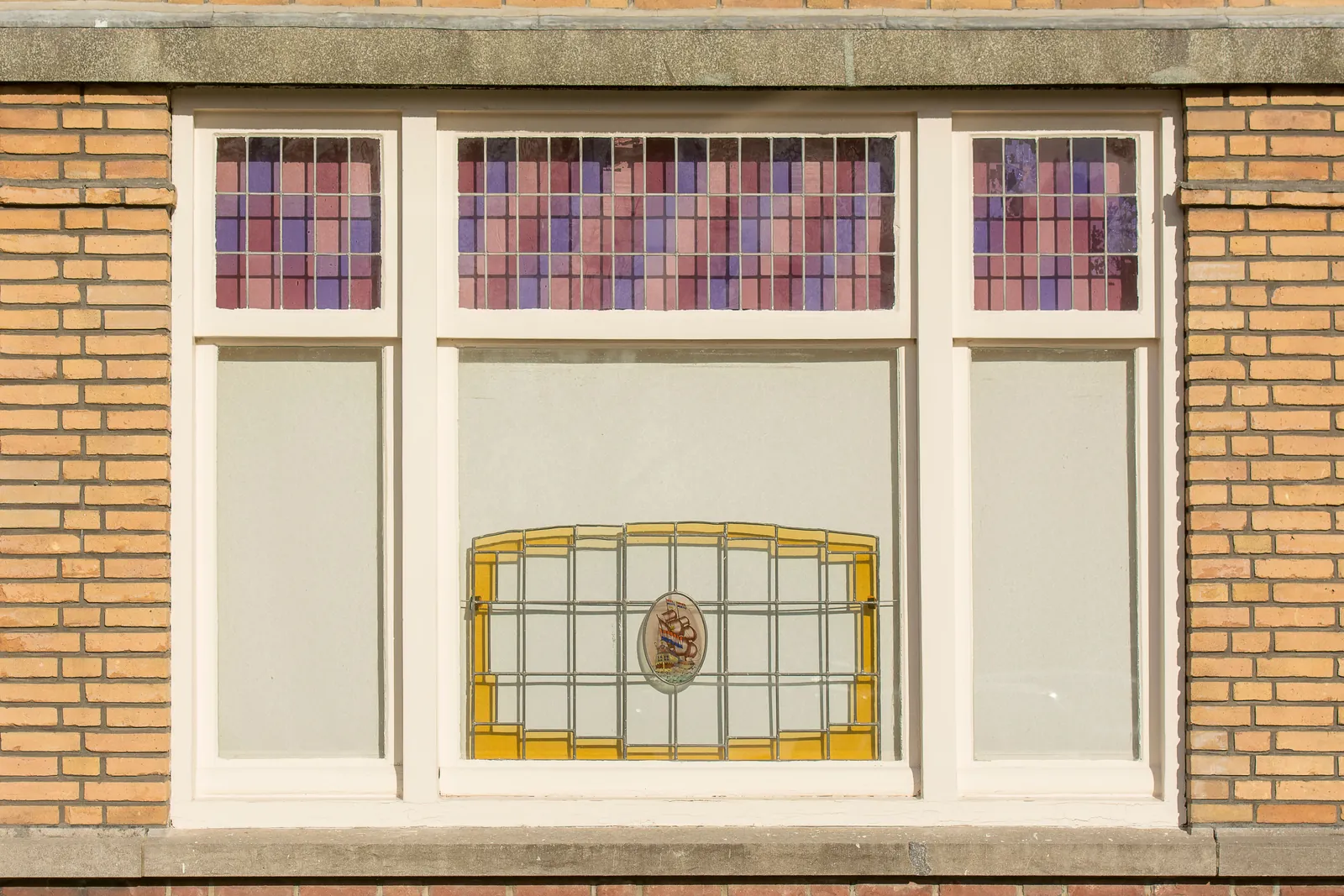
Stained glass gives a home character. You see it a lot in 1930s homes, old front doors, skylights, stairwells and monumental buildings. It provides color, atmosphere and an authentic appearance. But stained glass also has disadvantages: it insulates poorly, can cause drafts and is often more vulnerable than modern glass.
The short rule: if you want to maintain the appearance and insulate better, you can have stained glass incorporated into insulating glass or combine it with additional glass. If the panel is damaged, you can restore or replace it. In this article we explain what options are available, when to choose which solution and what you should pay attention to when replacing or improving stained glass.
What is stained glass?
Stained glass consists of small pieces of glass that are connected to each other with lead profiles. These lead profiles together form the pattern. Colored glass is often used, but stained glass can also be completely clear or partly frosted.
You often see stained glass in:
- front doors
- skylights
- bay windows
- stairwells
- 1930s homes
- monumental buildings
- churches
- old farms
- classic interiors
The special thing about stained glass is that it is not only functional, but also decorative. The glass is part of the appearance of the home.
Why replace or improve stained glass?
Many stained glass windows are old. The glass itself can still be beautiful, but the insulation value is usually low. The stained glass is often in the frame as single glass, which means you lose a lot of heat.
Reasons to replace or improve stained glass:
- poor insulation
- draft
- condensation
- heat loss
- high energy costs
- damaged lead
- broken glass pieces
- deflection of the panel
- rattling glass
- poor sound insulation
- maintenance of window frames
Yet many people do not want to get rid of the stained glass. That makes sense, because it often determines the atmosphere of the home. Fortunately, you do not always have to remove the original stained glass: there are several solutions that allow you to maintain the appearance.
Should stained glass always be replaced?
No. Stained glass does not always need to be completely replaced. Sometimes restoration or improvement is sufficient. Replacement is especially necessary when:
- the lead is seriously worn
- several pieces of glass are broken
- the panel sags a lot
- the glass is loose
- the window no longer closes properly
- the insulation needs to be greatly improved
- the frame is renovated
- the glass is no longer safe
Is the stained glass still beautiful and reasonably sturdy? Then you can often keep it and combine it with insulating solutions.
Rule of thumb: If you want to maintain the appearance, choose restoration, front glass or an insulating glass structure with stained glass. If you mainly want better insulation and do not have to return the cartridge, then HR++ or vacuum glass are the logical alternatives.
Option 1: restore stained glass
If the original stained glass is valuable or characteristic, restoration may be a good choice. The existing panel is repaired. During restoration, a specialist can:
- replace broken glass pieces
- repair loose lead
- renew soldering points
- clean the panel
- rebuild sagging parts
- recreate missing pieces
- make the glass firm again
Restoration is especially interesting if you want to preserve the original appearance. This is often the best solution for old homes and monuments.
The disadvantage is that restoration itself usually does not significantly improve insulation. In many cases the glass remains single glazing. Do you also want to insulate better? Then you can combine restoration with additional glass or insulating glass.
Option 2: placing stained glass in insulating glass
A popular solution is to have stained glass incorporated into insulating glass. The stained glass panel is then combined with modern insulating glass: usually placed between glass plates or incorporated into an insulating structure. This way the pattern remains visible, but the insulation is much better than with single glazing.
Advantages:
- original appearance is retained
- better insulation
- less draught
- less condensation
- better sound insulation
- stained glass is protected
- less maintenance on the old panel
- suitable for renovation
This is often a good choice for homes where appearance and comfort are important.
How does stained glass work in insulating glass?
With stained glass in insulating glass, the stained glass panel is incorporated into a modern glass structure. The exact version depends on the system and the condition of the existing panel. Broadly speaking, there are two possibilities:
- Existing stained glass is reused — the old panel is carefully removed, restored and then incorporated into insulating glass.
- New stained glass is recreated — the original pattern is recreated and then combined with insulating glass.
The result often looks very similar to the original window on the outside, but the insulation value is much better.
Advantages of stained glass in insulating glass
Stained glass in insulating glass is especially interesting if you want to preserve the character of your home, but do not want to be left with the disadvantages of single glazing. Important benefits:
- more living comfort
- less heat loss
- less cold fall at windows
- less draught
- less condensation on the inside
- better protection of the stained glass
- original appearance remains visible
- suitable for sustainability
The difference can be significant, especially in living rooms, front doors and bay windows. You keep the appearance, but the window feels less cold.
Disadvantages of stained glass in insulating glass
There are also points of interest. Disadvantages can be:
- more expensive than standard insulating glass
- not every old panel is immediately suitable
- restoration may be necessary
- the glass package becomes thicker
- it does not always fit into existing window frames
- weight increases
- the delivery time may be longer
- customization is important
The thickness is especially important. Insulating glass with stained glass is thicker than a separate stained glass panel. Therefore, always check whether the frame has enough space. See also our article about thicker insulating glass in an existing frame.
Option 3: additional glass for stained glass
Top glass is another way to better insulate stained glass. The existing stained glass remains in place and an additional glass plate is placed on the inside or outside. Top glass is interesting when:
- you do not want to remove the original glass
- the stained glass is part of a monument
- the panel is still in good condition
- you want to make less drastic changes to the home
- the frame cannot handle thick insulating glass
- you want to preserve the original construction
Front glass improves insulation and sound insulation, but usually less than modern HR++ glass. However, it can be a good solution if preserving the original glass is more important than maximum insulation.
Internal front glass or external front glass?
Front glass can be placed on the inside or outside.
Interior glass is placed on the room side. This is often more practical for maintenance and installation.
- Advantages: easier to reach; less influence on the outside appearance; often suitable for monuments; protects against drafts on the inside.
- Disadvantages: risk of condensation between glass layers must be properly prevented; ventilation of the space between is important; finishing must be done neatly.
Exterior glass is placed on the outside. This can better protect the stained glass against wind and weather.
- Benefits: protects the original glass; less weather load; can reduce drafts.
- Disadvantages: may change the exterior appearance; more sensitive to pollution; less suitable if the view is protected; mounting must be watertight and durable.
Which option is best depends on the home, the frame and the desired appearance.
Option 4: completely replace stained glass
Sometimes complete replacement is the best choice, for example when the stained glass is seriously damaged or when the appearance does not need to be preserved. You can then choose:
- new stained glass
- a reproduction of the old pattern
- HR++ glass
- vacuum glass
- figure glass
- frosted glass
- laminated safety glass
- insulating glass with decorative pattern
Complete replacement is especially logical when the old panel is technically poor or when you want to give the home a more modern look.
Have new stained glass made
Do you want to keep the style, but is the old panel no longer usable? Then you can have new stained glass made. The existing pattern can be imitated, or a new design can be created that suits the home. New stained glass is interesting for:
- missing original windows
- damaged panels
- renovation of front doors
- 1930s homes
- restoration of historical appearance
- interiors with classic style
New stained glass can also be combined with insulating glass, so you immediately get better performance.
Replaced stained glass with HR++ glass
Do you mainly want to insulate better and do not have to maintain the stained glass pattern? Then you can choose HR++ glass. HR++ glass is much better insulating than single glazing and is often a practical choice for existing window frames. You can easily assemble HR++ insulating glass to size.
- Advantages: good insulation; often more affordable than stained glass in insulating glass; sleek and clear appearance; less condensation; more comfort; possible subsidy.
- Disadvantage: the original appearance disappears. This is not always desirable for characteristic homes.
Are you unsure between thin and thick insulating glass? Then read vacuum glass versus HR++ glass. You may be eligible for the ISDE subsidy on insulating glass.
Stained glass replaced by vacuum glass
For old window frames, vacuum glass is sometimes an interesting solution. It is thinner than HR++ glass, but still insulates very well. Vacuum glass is especially interesting when:
- the frame is narrow
- HR++ glass is too thick
- you want to keep existing window frames
- the house is characteristic
- monumental appearance is important
- maximum insulation is desired with thin glass
Vacuum glass does not automatically replace the stained glass pattern. But it can be an alternative if the original stained glass does not need to be retained or if you are looking for another slim insulation solution. See also monument glass or vacuum glass.
Stained glass and safety
Old stained glass is usually not safety glass. It consists of separate pieces of thin glass, connected by lead. Sharp pieces may occur if broken. Safety is extra important in some places, such as:
- front doors
- side lights next to doors
- low windows
- windows to the floor
- stairwells
- children's rooms
- public areas
In such situations you can think of safety glass:
- laminated glass
- safety glass on one side
- front glass
- insulating glass with safety structure
Please note: insulating glass is not automatically safety glass. If safety is important, this must be explicitly taken into account in the glass structure. More about this in tempered or laminated glass.
Stained glass at front doors
Stained glass is often found in front doors and skylights. That looks nice, but front doors are sensitive to cold, drafts and safety. For front doors you can choose:
- restoration of existing stained glass
- stained glass in insulating glass
- front glass on the inside
- new stained glass
- insulating glass with decorative appearance
- laminated safety glass
Because a door moves, the construction must be sturdy. The glass must not rattle and must be properly sealed or locked in the door profile.
Stained glass at skylights
Skylights are windows above doors or frames. Here there is often stained glass in 1930s homes. Because skylights are usually small, restoration or inclusion in insulating glass is often possible.
NB:
- Does thicker glass fit in the frame?
- is the wood still good?
- Should the skylight be able to ventilate?
- does the pattern remain visible?
- is the size recorded exactly?
- does the glass have to be safety glass?
With skylights the effect on insulation may be smaller than with large windows, but it can reduce drafts and improve comfort.
Stained glass at monuments
You must be extra careful with monumental buildings or protected cityscapes. Sometimes you cannot simply replace the original glass or change the exterior appearance. Check in advance:
- whether the house is monumental
- whether a permit is required
- whether the outside view is protected
- whether the original glass should be retained
- which solutions are allowed
- whether additional glass or restoration fits better
For monuments, solutions are often chosen that preserve the original appearance, such as restoration, front glass or thin insulating glass.
Does stained glass fit in every frame?
Not always. Especially when you combine stained glass with insulating glass, the glass package becomes thicker. Therefore check:
- rebate depth
- space for glazing beads
- kit room
- condition of the frame
- weight of the glass package
- direction of rotation at windows or doors
- ventilation and drainage
- possibility for adapted glazing beads
Wooden frames often have more options than plastic or aluminum frames. Wood can be modified more easily.
How do you measure stained glass?
Always measure stained glass carefully. Replacement or insulating glass requires customization. Measure at a frame:
- width top, middle and bottom
- height left, middle and right
- the rebate size
- the sight size
- possible thickness of the existing panel
- rebate depth
- position of glazing beads
- possible tilt
Always use millimeters. Also take photos of the existing glass and frame. With stained glass, the pattern is important, so a photo helps with assessment or reproduction. You can find a detailed explanation in measuring glass.
Can you reuse existing stained glass?
Often yes, but not always. Reuse is possible when:
- the panel can be carefully removed
- the glass is not too badly damaged
- the lead can still be repaired
- the pattern can be retained
- the dimensions are suitable
- the panel can be technically processed
Sometimes the panel must first be restored before it can be incorporated into insulating glass. Is the stained glass very fragile or seriously damaged? Then imitating new stained glass may be better.
How much does it cost to replace stained glass?
The costs depend greatly on the solution chosen. Restoration, front glass and stained glass in insulating glass differ considerably in price. The price is determined by:
- size
- number of panels
- state of lead
- amount of repair work
- type of glass
- whether or not insulating glass
- with or without safety glass
- assembly
- accessibility
- whether or not there are monumental requirements
It is therefore difficult to give a standard price. Stained glass is almost always custom work.
Which solution do you choose?
| Situation | Best solution |
|---|---|
| Original glass is beautiful and good | Front glass or insulating glass construction |
| Original glass is damaged | Restoration |
| Lead is worn out | Restore or rebuild |
| You want better insulation | Stained glass in insulating glass |
| Frame is too narrow | Consider additional glass or vacuum glass |
| Monumental building | Restoration or top glass |
| Pattern does not have to be returned | HR++ glass or vacuum glass |
| Front door with stained glass | Combining safety and insulation |
| Low windows | Bring safety glass |
Common mistakes when replacing stained glass
- Discard original glass too quickly — often stained glass can be restored or reused.
- Only look at insulation — with characteristic homes, appearance is often just as important.
- Do not check whether the frame can handle thicker glass — stained glass in insulating glass is thicker than the original panel.
- Forgot Safety — safety is important for doors, low windows and sidelights.
- Do not take monument rules into account — not everything can be changed at monuments just like that.
- Do not take photos — photos are important for reproduction, review and customization.
- Incorrect ventilation of front glass — poor ventilation between glass layers can cause condensation problems.
Checklist before replacing stained glass
- Do you want to keep the original stained glass?
- Is the panel still in good condition?
- Is restoration necessary?
- Do you want better insulation?
- Is front glass sufficient?
- Does insulating glass fit in the frame?
- Is the frame in good condition?
- Is safety glass necessary?
- Is the glass in a door or low window?
- Is the house monumental?
- Are permits required?
- Should the pattern be copied?
- Do you have clear photos?
- Are all dimensions included in millimeters?
- Do you want HR++ glass, vacuum glass or a combination?
Conclusion
Replacing stained glass does not automatically mean that you lose the original appearance. In many cases you can keep the existing stained glass, restore it or incorporate it into insulating glass. This way you combine character with more comfort and better insulation.
Do you mainly want to maintain the appearance? Then look at restoration, front glass or stained glass in insulating glass. Do you mainly want better insulation and is the pattern less important? Then HR++ glass or vacuum glass are good alternatives. Always check the condition of the glass, lead and frame. Also pay attention to safety, thickness, ventilation and any monument rules.
Do you already know what you need? Calculate your customization directly via custom glass, or first read how to measure glass for an accurate order. Are you unsure about the best solution for your stained glass? Request advice without obligation.