
When you order custom glass, you don't just choose the size and thickness. The edge finish is also important: the edge determines how safe the glass is, what it looks like and what you can use it for.
The most important rule is simple:
Does the glass disappear completely in a frame, profile or frame? Then sharp edges are usually sufficient. Does the edge remain visible or can you touch it? Then choose flat poly-cut glass.
An incorrect edge finish causes sharp edges, a cutting hazard or a less attractive finish. Below we explain what the difference is, when to choose which option and which mistakes it is better to avoid.
What does edge finishing mean for glass?
Edge finishing is the way the sides of a sheet of glass are finished after the glass has been cut to size. Cutting creates a rough, sharp edge. This is fine if the glass disappears completely into a frame, but unsafe if you can touch it.
The most commonly chosen options are:
- sharp edges;
- flat poly ground edges;
- facet cut edges;
- rounded corners or special treatments.
For most projects, the choice is mainly between sharp edges and flat poly ground glass.
What are sharp edges?
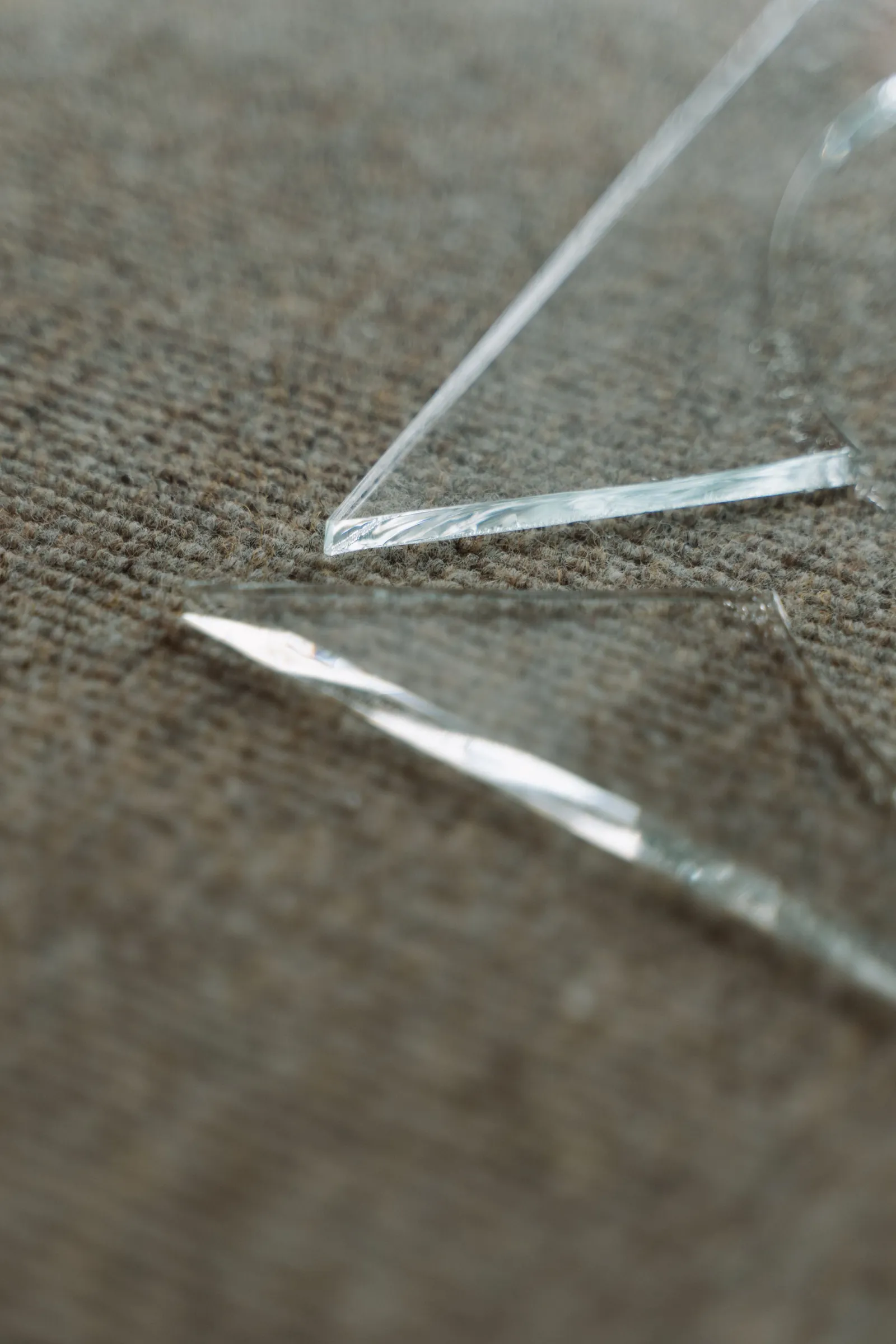
Sharp edges mean that the glass is only cut to size — the edges are not additionally ground or polished afterwards. The glass edge is then sharp, rough, slightly serrated and not safe to touch with bare hands.
That sounds negative, but sharp edges are not necessarily bad. They actually make sense if you can no longer see or touch the edges after installation.
When do you choose sharp edges?
Sharp edges are suitable for glass that is completely enclosed in a frame, profile or frame. Consider:
- window glass in a wooden frame;
- HR++ glass in a frame;
- insulating glass;
- glass in an aluminum profile;
- glass that falls completely into a deep rebate;
- glass behind glazing beads.
With these applications you no longer see the edge after installation — it is safely concealed. Additional sharpening is usually not necessary.
Advantages: it is the most economical option, sufficient for glass in frames, no additional processing is required, and it does not affect the operation of the glass if the edge is not visible.
Disadvantage — Safety: Sharp edges can cause cuts during lifting, assembly or cleaning. Therefore, always wear work gloves. Sharp edges are not suitable for table tops, shower walls, glass doors, wall shelves, mirrors without frames, display cabinets, balustrade glass or glass that is free in the room.
Tempered glass: edge skimmed as standard
With tempered glass (ESG), the edges are lightly skimmed (the sharp cutting edge is broken) before the glass is tempered — so this is already included in tempered glass. Do you want a completely smooth, polished edge? For tempered glass, choose the Polished (flat poly) finish. Important: all edge finishing is done before tempering, because tempered glass cannot be sanded or processed afterwards.
What is flat poly cut glass?
Flat poly cut glass has a smooth, neatly finished edge. The glass edge is machine-ground flat and then polished, which makes it feel safe and gives the glass a neat, luxurious look. The sharp corners along the edge are also slightly removed.
In our custom glass configurator this finish is called Polished (flat poly). You choose the edge finish when putting together, per glass type on the relevant type page. Glass can be polished from 4 mm: with 2 and 3 mm glass the plate is too thin and too fragile to grind, so only the sharp (cut) side remains.
When do you choose flat poly cut glass?
You choose flat poly cut when the glass edge remains visible or can be touched. Consider:
- glass table tops;
- shower walls;
- glass doors;
- wall shelves;
- mirrors without frame;
- display cabinets;
- sliding glass doors;
- balustrades;
- glass in glass clamps;
- interior glass.
Some types of glass come with a polished edge as standard: walkable glass for floors, stairs and skylights is always ground around flat poly, because the edges are always visible and touchable in that application.
Benefits: safe to touch, a sleek professional look, easier to clean, less chance of minor edge damage and ideal for visible glass. This is almost always the best choice for shower walls, table tops and glass doors.
Sharp edges vs. flat poly cut: overview
| Attribute | Sharp edges | Flat poly cut |
|---|---|---|
| Finish | Unprocessed after cutting | Flat ground and polished |
| Safety | Sharp, cutting hazard | Safe to touch |
| Appearance | Rough and dull | Sleek and shiny |
| Price | Cheapest | More expensive due to additional processing |
| Best Application | Glass in frame or profile | Visible and touchable glass |
| Cleaning | Do not touch edge | Easy to clean |
| Examples | Window glass, HR++ glass | Shower enclosure, table top, mirror |
Which edge finish do you choose per application?
| Application | Best Edge Finish |
|---|---|
| Window glass in frame | Sharp edges |
| HR++ glass | Sharp edges |
| Triple glass | Sharp edges |
| Glass in deep rebate | Sharp edges |
| Glass in U-profile | Often sharp edges |
| Shower enclosure | Flat poly cut |
| Glass door | Flat poly cut |
| Table top | Flat poly cut |
| Wall shelf | Flat poly cut |
| Mirror without frame | Flat poly cut or faceted |
| Display cabinet | Flat poly cut |
| Sliding glass doors | Flat poly cut |
| Balustrade glass | Flat poly cut |
Are you in doubt? Ask yourself one question: can I touch the glass edge after installation? If the answer is yes, then choose flat poly cut.
What is faceted glass?
In addition to sharp edges and flat poly cut, there is also facet cut glass: the edge gets a slanted, glossy finish. Facet is mainly chosen for its appearance — it gives glass a more luxurious, classic look, popular with mirrors, decorative glass, furniture glass and interior projects. For most practical applications, flat poly ground is sufficient; facet you choose mainly for an extra decorative effect.
Can I sand glass edges myself?
No, that's usually not a good idea. Sanding sharp glass edges yourself with sandpaper, a grinding wheel or a sanding block seems cheap, but the result is rarely good. Sanding glass yourself can cause uneven edges, scratches, tension in the glass, minor damage, a greater risk of breakage and a less professional appearance. Moreover, you will never get the edge as tight as with machining. Therefore, order glass that remains visible immediately with the correct edge finish.
Why is the glass edge vulnerable?
Many people think that glass is especially vulnerable in the middle, but many breaks occur at the edges. A small damage on the side can develop into a crack, especially if the glass is under tension or loaded. A good edge finish is therefore important for glass that is often touched, clamped, freestanding, used as a door or wall, on furniture or in a damp room. A smooth, ground edge is not only more beautiful, but also more practical and safer.
Common mistakes in edge finishing
- Choose sharp edges for exposed glass. The most common mistake — a sharp edge on a table top, shower wall or shelf is dangerous and looks unfinished.
- Thinking that glass in a frame always needs to be ground. Usually not necessary: if the edge disappears behind glazing beads or in a profile, sharp edges will suffice.
- Want to finish the glass yourself later. Sanding or grinding yourself almost never gives a nice result and can damage the glass.
- Choose only on price. Sharp edges are cheaper, but with visible glass you are better off paying a little more for safety and finish.
- Forgetting that the edge remains visible. With mirrors, wall shelves and display cabinets, the edge often determines the appearance.
What should you choose?
Choose sharp edges if the glass completely disappears into a frame, the edges are not visible, you cannot touch them, or you are ordering window glass or insulating glass.
Choose flat poly cut glass if the edge remains visible, you can touch it, the glass is used in the interior, you want a safe and neat finish, or it is a shower wall, table top, door, mirror or wall shelf.
Conclusion
The correct edge finish depends on how you use the glass. Does it disappear completely in a frame, profile or frame? Then sharp edges are usually sufficient: economical and practical. Does the edge remain visible or do you touch it? Then flat poly-cut glass is the best choice — smooth, safe, beautifully finished and suitable for daily use.
Remember the rule of thumb: if you see or touch the edge, choose flat poly sharpened; the edge disappears completely into the frame, choose sharp edges. Are you going to replace glass for an existing frame? Also read will thicker insulating glass fit in my existing frame? and check how to measure glass correctly.
Do you want to order? Put together your glass in the configurator and immediately choose the right edge finish for your project.