
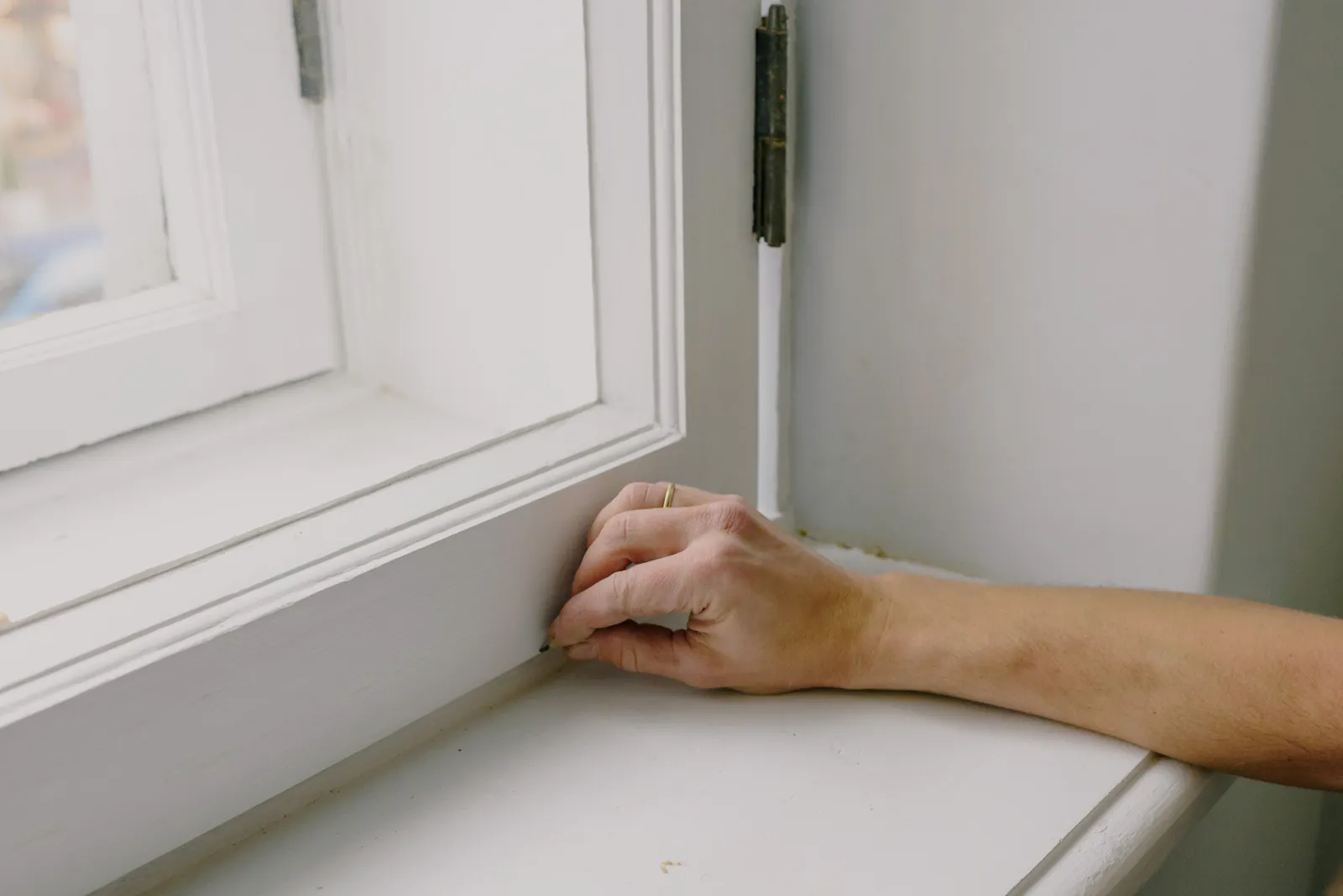
Drafts near windows are annoying. You feel cold air past the window, the room remains less comfortable and your heating has to work harder. Sometimes drafts are caused by old window frames or bad rubbers, but it can also be due to glass, sealant, ventilation grilles or incorrect placement.
The short rule is: You can solve drafts in windows by first finding the cause. Check rubbers, sealant seams, glazing beads, ventilation grilles, closures and cracks around the frame. Only then do you choose the right solution. In this article we explain how drafts arise, how to recognize the cause and what solutions are available.
What exactly is draft?
Draft is unwanted air flow in the house. You feel cold air along windows, doors or walls. Drafts usually arise from outside air entering through cracks or seams.
Drafts can arise from:
- old wooden frames
- poorly closing windows
- worn rubbers
- open seams in sealant
- poor connection between glass and frame
- loose glazing beads
- ventilation grilles
- seams around the frame
- warped windows
- outdated single glazing
- poorly placed insulating glass
Draft is not the same as cold trap. When there is a draft, air actually comes in. During cold spells, air feels cold because it cools along cold glass and sinks downwards. You can read more about this in cold trap at windows.
How do you recognize drafts near windows?
You often notice a draft from a cold air flow. Sometimes you can feel it directly with your hand, but not always. Signs of a draft:
- cold air past the window
- curtains move slightly
- cold at the windowsill
- room feels cold despite heating
- higher energy costs
- whistling sound in wind
- dust or dirt at seams
- condensation in cracks
- temperature difference around the frame
- window does not close properly
Drafts can start small, but cause a lot of loss of comfort.
Draft or cold: what's the difference?
Many people call everything a draft, but there is an important difference between a draft and a cold.
| Problem | What's happening? | Cause |
|---|---|---|
| Tour | Outside air comes in through cracks | Seams, rubbers, closures or frame |
| Cold trap | Indoor air cools along cold glass and sinks | Poor insulation of glass |
| Condensation | Moisture settles on cold glass | High humidity and cold surface |
| Leakage | Water comes in | Kit, connection or frame problem |
You have to close cracks when there is a draft. Better insulating glass often helps more in case of cold. Are you unsure whether it is moisture? Then read condensation on windows: inside, outside or between the glass.
Where does draft on windows come from?
Drafts can arise in different places. It is important to determine where exactly the air enters. In particular check:
- between window and frame
- rotating parts
- along rubbers
- with glazing beads
- along sealant seams
- at ventilation grilles
- between frame and wall
- under the windowsill
- with old putty
- for damaged wood
- with poorly fitting hinges and locks
Use your hand, a candle, or a piece of thin paper to detect air currents. Be careful with open flames near curtains.
Draft through worn rubbers
Plastic, aluminum and some wooden frames contain rubbers that seal the window airtight. After years, those rubbers can dry out, crack or become flattened. Signs of worn rubbers:
- window closes, but still draft
- rubber feels hard or brittle
- rubber is torn
- rubber is loose
- rubber is deformed
- there is dirt or mold in the rubber edge
Solution: clean, replace or replace rubbers. Use rubbers that match the profile of the frame.
Draft due to poor closure
A window can cause drafts if it does not pull properly against the frame. This can be due to worn closures, incorrectly adjusted fittings or a warped window. Check:
- does the window close equally tightly everywhere?
- can you pull paper between the window and frame?
- is there any play in the window?
- Does the window handle work properly?
- are hinges worn?
- is the window crooked?
- does the multi-point lock close properly?
Sometimes the window can be readjusted. Old windows may require replacement of hardware.
The paper test during draught
You can check whether a window closes properly with a piece of paper. This is how it works:
- Open the window.
- Place a sheet of paper between the window and frame.
- Close the window.
- Gently pull on the paper.
- Repeat this in several places.
Do you pull the paper loose easily? Then the window probably won't close properly there. Is the paper firmly attached? Then the seal is better. This test mainly works on rotating parts.
Rule of thumb: if air passes a seam or closure, then close the crack. If the glass itself feels cold without any real air flow, this is a case of cold trap and better insulating glass helps.
Draft through sealant seams
Seams provide a seal between glass, frame and sometimes wall or windowsill. If sealant ages, cracks or comes loose, cracks can appear. Signs of bad sealant:
- cracks
- loose edges
- open seams
- discoloration
- damp spots
- draft along glass
- sealant is hard and crumbly
- sealant comes loose from glass or frame
Solution: remove old sealant and re-seal with suitable sealant and sealant tools. Do not apply new sealant over loose old sealant. In which kit do you use what? you can read which type suits the glass, frame and application.
Tour through glazing bars
Glazing beads hold the glass in place and help with the seal. If glazing beads are loose, poorly connected or damaged, drafts can occur. Check:
- are glazing beads firmly attached?
- are there open seams?
- is wood rot visible?
- are glazing beads warped?
- does the kit fit properly?
- is the glass placed correctly?
- is there dirt or space between the glazing bead and the frame?
In wooden frames, glazing beads can wear out or rot. Replacement may then be necessary: see replacing glazing beads with insulating glass. You can easily order new glazing beads and glazing blocks.
Tour through old putty
In older windows, glass was often secured with putty. Old putty can dry out, crack and peel. This causes cracks. Signals:
- friable putty
- cracks along glass
- loose pieces
- moisture behind the putty
- draft along the glass
- paintwork is peeling
Solution: Remove old putty and reseal. When renovating, it can be smart to immediately look for better insulating glass.
Draft around the frame
Sometimes drafts do not come through the window itself, but around the frame. Then there is a gap between the frame and the wall or between the frame and the paneling. You can recognize this by:
- cold air along day sides
- draft at windowsill
- cracks around the frame
- open connection with wall
- loose panelling
- cold spots next to the frame
Solution: seal seams with suitable material, such as compriband, airtight tape, insulating foam or sealant, depending on the situation. For large cracks, sealant alone is often not enough.
Draft at ventilation grilles
Ventilation grilles deliberately let air in. Sometimes that feels like a draft. Nevertheless, ventilation is important for a healthy indoor climate. A grille can cause too much draft if:
- the grille is positioned incorrectly
- the grille is dirty
- wind is directly on the grille
- the grille is old or difficult to adjust
- there is no good air distribution
- the heating is set incorrectly
- the room is poorly insulated
Do not permanently close ventilation grilles without considering ventilation. This can lead to moisture and mold. Do you want to neatly integrate or replace a grille? Read ventilation grille in glass or view our ventilation grilles.
Draft and type of glass
Draft through single glazing
Single glazing does not always cause a real draft, but it often feels like it is drafting. This is due to cold fall: air cools along the cold glass and sinks downwards. You then notice:
- cold air past the window
- cold windowsill
- condensation on glass
- large temperature difference
- cold near the floor
- chilly feeling near window
Solution: better insulating glass, such as HR++ glass, vacuum glass or monumental glass for old window frames. Curtains can also help temporarily, but do not solve the cause. View the options in replacing single glazing: options.
Draft with double glazing
Double glazing insulates better than single glazing, but old double glazing can still feel cold. Rubbers, sealant or frames may also be outdated. For double glazing, check:
- is there condensation between the glass sheets?
- is the kit still good?
- are glazing beads sturdy?
- is the frame still good?
- does the window close properly?
- is the glass old and poorly insulating?
Replacing old double glazing with HR++ or vacuum glazing can improve comfort, but only if drafts do not get through cracks. See replacing double glazing and, if the window is fogged up, identifying and replacing leaking double glazing.
Draft at HR++ glass
HR++ glass itself usually does not cause draughts. If you still feel a draft after installation, this is often due to the connection. Possible causes:
- window does not close properly
- Seams are not properly finished
- Glazing beads do not fit properly
- ventilation grille provides air flow
- frame has cracks
- cold bridge around the frame
- interior finish is not airtight
So don't just check the glass, but the entire connection. You can read exactly what HR++ glass is in HR++ glass: what is it.
Drafts with special window types
Draft from tilt and turn windows
Tilt and turn windows have rubbers and fittings all around. If the fitting is not adjusted properly, the window may close less tightly in some places. Problems with tilt and turn windows:
- window closes crookedly
- rubber does not press everywhere
- stool feels loose
- hinges are worn
- crack at the top
- draft at corners
A specialist can often readjust the fitting.
Draft at sliding doors
Sliding doors are sensitive to drafts if rubbers, brushes or rails are dirty or worn. Check:
- rails clean?
- sliding part closes straight?
- rubbers intact?
- brush seals still good?
- closure tightens properly?
- sill clean?
- water drain open?
A sliding door must run smoothly and close properly. Dirt in the rails can disrupt the seal.
What solutions are there against drafts?
Temporary solutions against drafts
Sometimes you want to do something quickly to prevent drafts, for example in winter. Workarounds:
- install draft excluder
- use window film
- hang thick curtains
- temporarily seal the crack
- draft roller on windowsill
- Open the grille less widely
- clean rubbers
- adjust closure
- temporarily tape up seams
This helps in the short term, but does not always solve the cause definitively.
Install draft excluders
Draft strips are a simple solution for gaps in opening windows. They are available in different shapes and thicknesses. You will find the necessary mounting material and tools in our range. NB:
- choose the right thickness
- clean and dry the surface
- do not place the strip too thickly
- the window must still close properly
- use a suitable strip for outdoors or indoors
- After installation, check whether the window is not stuck
A draft strip that is too thick can cause problems with closing.
Replace rubbers
For frames with existing rubber profiles, replacement is often better than sticking extra weatherstripping. NB:
- the profile must fit
- the rubber must have the same function
- Remove the old rubber properly
- clean the groove
- do not pull or stretch during installation
- let the corners fit neatly
Preferably use original or suitable rubbers for the frame system.
Renew sealant seams
Are sealant seams torn or loose? Then you have to renew them. Steps:
- Carefully cut away old caulk.
- Remove loose residue.
- Clean the surface.
- Degrease if necessary.
- Let everything dry.
- Apply suitable sealant.
- Iron neatly.
- Allow to harden according to instructions.
Use the correct sealant for glass, frame and outdoor or indoor application.
When should you replace glass?
Replacing glass especially helps when the problem is due to poor insulation, cold or old glass. In the case of real cracks, you must first dissolve the seal. Replacing glass makes sense when:
- single glazing
- old double glazing
- lots of cold
- condensation on glass
- high energy costs
- poor comfort
- leaky double glazing
- renovation of window frames
Possible choices: HR++ glass, triple glass, vacuum glass, monument glass or sound-insulating insulating glass.
When should you replace the frame?
Sometimes the window or glass is not the biggest problem, but the frame. Frame replacement may be necessary for:
- wood rot
- warped windows
- poor closure
- large cracks
- poor insulation
- outdated hinges and locks
- a lot of maintenance
- leakage
- poor connection to the wall
Repair is often possible with good wooden frames. In case of serious rot or deformation, replacement is wiser. You can read more about the consequences of moisture in wood rot due to poor glazing.
Solve drafts without ventilation problems
Do not make a home completely waterproof without ventilation. A house must be airtight where there are unwanted cracks, but controlled ventilation is still necessary. NB:
- do not permanently close grilles
- ensure air supply
- ventilate damp areas
- prevent mold
- use mechanical ventilation properly
- ensure flow under doors
Combating drafts is good, but ventilation must continue to work.
Which mistakes should you avoid?
- Replace glass immediately — if drafts are coming through cracks, new glass won't help enough.
- Closing ventilation grilles — this can cause moisture and mold.
- Putting draft strips that are too thick — this sometimes makes it harder for the window to close.
- Spread sealant over old loose sealant — new sealant does not adhere well to old bad sealant.
- Ignore rubbers — worn rubbers are a common cause.
- Confuse a cold draft with a draught — during a cold draft, no outside air comes in.
- Seal inside only — sometimes the problem is in the outside seal or construction.
Selection aid: which solution suits your draft problem?
| Problem | Possible solution |
|---|---|
| Gap between window and frame | Replace weather strip or rubbers |
| Worn rubber | Install new rubber profile |
| Bad closure | Adjust window or replace fittings |
| Cracks in sealant | Renew sealant seams |
| Loose glazing bead | Repair or replace glazing bead |
| Draft around frame | Make the connection airtight |
| Ventilation grille gives cold | Clean, adjust or replace grille |
| Cold trap through single glazing | HR++ glass or vacuum glass |
| Old double glazing feels cold | HR++ consider glass |
| Wood rot at frame | Restore wood or replace frame |
Checklist for drafts around windows
Check these points:
- Do you feel real airflow?
- Does the air pass the glass or the frame?
- Are rubbers still flexible?
- Does the window close properly?
- Are sealant seams intact?
- Are glazing beads stuck?
- Is there wood rot?
- Does a draft come through a ventilation grille?
- Is there cold through single glazing?
- Is there condensation on the window?
- Are seams around the frame closed?
- Is the fitting properly adjusted?
- Is the problem worse in wind?
- Is ventilation still sufficient?
Conclusion
Drafts near windows can have various causes. Sometimes outside air comes through cracks, worn rubbers, bad sealant or a poorly closing window. Sometimes it looks like a draft, but it is actually a cold trap due to poorly insulating glass.
Therefore, always start by looking for the cause. Check rubbers, closures, sealant seams, glazing beads, ventilation grilles and the connection around the frame. Only then do you choose the right solution. You can often solve minor draft problems with new rubbers, draft strips, sealant or window adjustment. With single glazing or old double glazing, better insulating glass can provide a lot of comfort. This way you make your home warmer, more comfortable and more energy efficient without unnecessarily replacing the wrong parts.
Read more? View cold trap on windows, condensation on windows and the difference between vacuum glass and HR++ glass. Do you want to get started with better insulating glass? Simply order custom glass or put together your custom insulating glass, or contact contact for personal advice.