
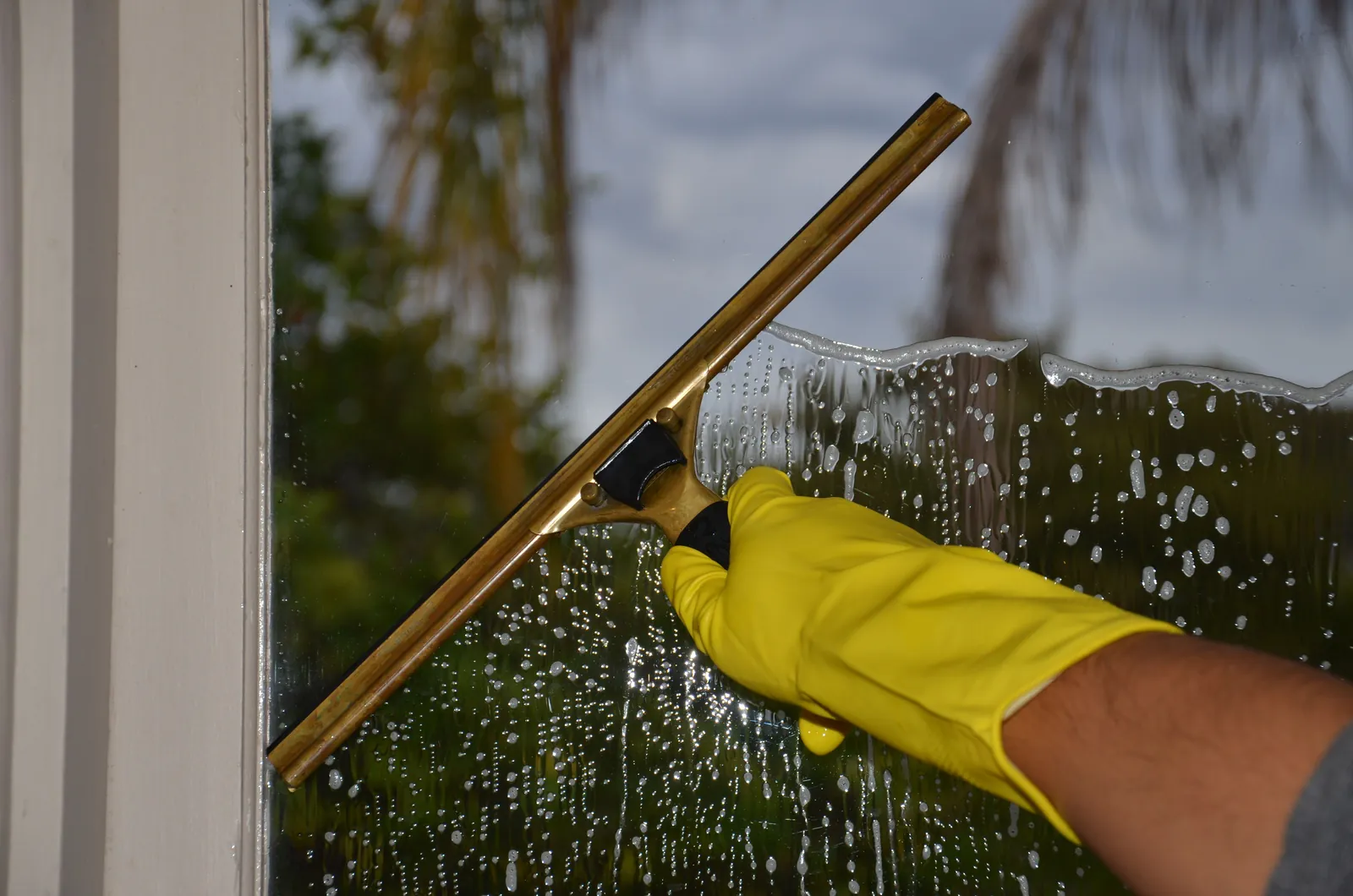
Cleaning glass seems simple, but getting a streak-free result is sometimes difficult. You clean the window, mirror or shower wall and as soon as the light hits it, you still see streaks, spots or haze. This is often not due to the glass, but to the cleaning method. The short rule is: use little cleaning agent, clean water, a soft cloth or squeegee and always dry glass thoroughly. It is best not to clean glass in direct sunlight, because then it dries too quickly and streaks appear.
In this article we explain how to clean glass without streaks, which products you do and do not use and how to keep windows, mirrors, shower glass and table tops nice and clear.
Rule of thumb for streak-free glass: little product, clean water, dry thoroughly — and never in direct sunlight.
Why do streaks appear on glass?
Streaks usually occur because dirt, lime, grease or cleaning products remain on the glass. When the water dries, those residues remain visible as haze or streaks. Common causes include:
- too much cleaning agent;
- dirty water;
- a dirty cloth;
- cleaning in the sun;
- glass not dried properly;
- lime in the water;
- grease on the glass;
- wrong glass cleaner;
- old residues of cleaning products;
- cleaning with paper towels that leave lint behind.
For streak-free glass you do not necessarily need aggressive products. The right technique is more important.
What do you need to clean glass?
You don't need much for most types of glass. You can find a good microfiber cloth, glass cloth and window squeegee at our glass cleaning and tools. Useful materials:
- bucket with lukewarm water;
- soft sponge or washer;
- microfiber cloth;
- glass cloth;
- window wiper or puller;
- mild dishwashing liquid;
- possibly glass cleaner;
- dry cloth for edges;
- soft brush for a lot of dirt.
It is better not to use a scouring pad, steel wool or abrasive cleaner. These can damage glass or cause minor scratches. Is there already a scratch in your glass? Then you can read there what does and does not help.
The best basis: water with a little bit of washing-up liquid
For windows and many glass surfaces, lukewarm water with a few drops of dishwashing liquid often works well. Don't use too much detergent — that's a common mistake. Too much soap leaves a greasy layer, causing streaks.
Good ratio:
- bucket of lukewarm water;
- a few drops of washing-up liquid;
- mix well;
- do not foam like a soapy bath.
The water should dissolve dirt, not cover the glass with a soap film.
Cleaning glass without streaks: step-by-step plan
Use this simple step-by-step plan for windows, doors and large glass surfaces.
Step 1: Remove loose dirt
First rinse or wipe away dust, sand and dirt. This prevents scratches during cleaning. Exterior windows in particular can contain sand or dust. If you rub it hard straight away, small scratches may occur.
Step 2: Wet the glass
Use a sponge, detergent or soft cloth with lukewarm soapy water. Wet the glass evenly. Work from top to bottom to prevent dirty water from running over a clean part.
Step 3: Pull the glass dry
Use a window squeegee and pull the water into strips from the glass. Wipe the squeegee dry with a cloth after each job. You can work horizontally or vertically; it is important that paths overlap slightly.
Step 4: dry the edges
Use a dry microfiber cloth to dry the edges, corners and frames. Drops often remain here and later cause streaks.
Step 5: Check in daylight
Look from different angles. You often only see stripes when the light falls diagonally on the glass.
Do not clean glass in direct sunlight
A known cause of streaks is cleaning in direct sunlight. The glass becomes warm and the water dries up too quickly. This leaves soap residue and limescale behind. Better clean glass:
- on a cloudy day;
- in the morning;
- on the shadow side;
- when the glass is cool;
- not in the middle of a hot summer day.
This makes a big difference with windows and large glass fronts.
Use clean water
Dirty water causes streaks. Especially on exterior windows, the soapy water quickly becomes dirty due to sand, dust and deposits. Change the water on time, especially when:
- large windows;
- a lot of outdoor dirt;
- windows on the street side;
- glass with green deposits;
- window frames with dust or sand;
- glass after renovation.
A clean cloth in dirty water still leaves streaks.
Microfiber cloth or paper towel?
It is better to use a good microfiber cloth or glass cloth. Kitchen paper can leave behind lint and is often less suitable for large surfaces.
| Material | Suitable? | Note |
|---|---|---|
| Microfiber cloth | Yes | Good for drying |
| Glass cloth | Yes | Ideal for streak-free results |
| Window puller | Yes | Best with large windows |
| Paper towels | Sometimes | Can fluff |
| Scouring sponge | No | Can scratch |
| Old rough cloth | No | Can cause dirt and scratches |
Wash microfiber cloths without fabric softener. Fabric softener can leave a greasy film that causes streaks.
Using glass cleaner: yes or no?
Glass cleaner can be useful for small surfaces, such as mirrors, glass tables or fingerprints on doors. For large windows, water with a little detergent is often better and cheaper.
Glass cleaner is useful for:
- mirrors;
- fingerprints;
- glass interior doors;
- table tops;
- case glass;
- small windows.
Note: do not spray too much. Too much glass cleaner actually leaves streaks. Spray on the cloth rather than directly on the glass, especially on mirrors or glass with edges.
Using vinegar for glass
Vinegar can help against limescale and light deposits. Vinegar is often used, especially for shower glass. But use it carefully and not on all materials.
Vinegar can be useful for:
- limescale;
- water stains;
- shower walls;
- exterior windows with light deposits.
Be careful with vinegar:
- natural stone;
- sealant edges;
- metal profiles;
- coatings;
- mirrors;
- lacquered glass;
- special glass treatments.
Use diluted vinegar and rinse thoroughly. Do not leave it on sealant or metal parts for a long time. We have a separate article for stubborn limescale on your shower wall: limescale on shower glass.
Use methylated spirits or ammonia?
Spirits and ammonia are sometimes used for windows, but they are not always necessary. They can smell strongly and are less pleasant to use. Use them carefully and never just on:
- coated glass;
- mirrors;
- shower glass with coating;
- lacquered glass;
- glass with foil;
- plastic frames;
- painted surfaces.
For normal glass, mild cleaning is usually sufficient. Always start with the least aggressive method.
Clean windows without streaks
A window squeegee works best for windows. The combination of washing, pulling and drying the edges usually gives the tightest result. Tips for windows:
- first clean the window frames and windowsill;
- use little detergent;
- work from top to bottom;
- wipe the tractor dry after each job;
- dry edges thoroughly;
- do not work in direct sunlight;
- Change dirty water on time.
For exterior windows, it is smart to first rinse or carefully remove coarse dirt. Do you mainly see deposits between the windows instead of on them? Then it concerns condensation in the glass and cleaning does not help.
Clean mirrors without streaks
Mirrors quickly leave streaks, especially due to grease, toothpaste, hairspray and moisture. Do not use too much moisture, because moisture can get behind the mirror through the edges. This is how you clean a mirror:
- Spray glass cleaner on a cloth, not directly on the mirror.
- Wipe the mirror clean with a microfiber cloth.
- Dry with a dry glass cloth.
- Carefully dry edges.
Do not use aggressive products on mirrors. The reflective layer is on the back and can be affected by moisture or the wrong materials. Are you considering a custom mirror? Also read what you should pay attention to with a custom mirror.
Clean shower glass without streaks
Shower glass often suffers from limescale, soap residue and water stains. As a result, glass cleaner alone is sometimes not enough. Shower glass tips:
- wipe the glass dry after each shower;
- regularly use a mild descaler;
- rinse cleaning agent thoroughly;
- dry with a microfiber cloth;
- do not use a scouring pad;
- pay attention to anti-limescale coating;
- carefully clean sealant edges.
Does your shower wall have a coating? Then only use products that are suitable for this purpose. Aggressive descaler can damage the coating. You can find more products for the bathroom in the shower and bath category.
Cleaning glass table top
A glass table top often gets fingerprints, grease and circles. Use a soft cloth and mild detergent. Steps:
- Remove crumbs or sand.
- Clean with a slightly damp cloth.
- Use glass cleaner for grease stains.
- Dry with a glass cloth.
- Lift decoration instead of sliding.
Do not use abrasives. Glass can scratch, especially if there is sand or hard particles on it.
Cleaning glass doors
Glass doors often get fingerprints around the handle. Glass cleaner is useful there. Tips:
- spray on the cloth;
- clean around the handle extra;
- dry the edges;
- clean fittings separately;
- do not use aggressive agents on black or coated fittings.
Fingerprints may be more visible with frosted glass. Then use a slightly damp cloth and dry thoroughly.
Clean frosted glass
Frosted glass is more sensitive to visible stains than clear glass. Grease and fingers can remain clearly visible in the matte surface. Tips:
- use lukewarm water;
- use little mild cleaning agent;
- do not rub too hard in one place;
- treat the entire surface evenly;
- dry thoroughly;
- avoid greasy cleaning products.
Do not just clean the stain, but preferably the entire glass surface. Otherwise, color difference or a cleaning spot may remain visible.
Clean smoked glass and colored glass
Smoked glass, bronze glass and colored glass can be cleaned just like normal glass, but streaks are sometimes more noticeable due to the dark tint. Tips:
- use microfiber cloth;
- use little cleaning agent;
- dry thoroughly;
- avoid abrasive substances;
- check under grazing light.
With lacquered glass you have to be careful at the back. The paint layer must not be damaged.
Clean coated glass
Some types of glass have a special coating, such as:
- anti-limescale coating on shower glass;
- sun protection coating;
- heat-resistant coating;
- self-cleaning coating;
- mirror coating;
- decorative coating.
Always use suitable products for coated glass. Avoid abrasives, aggressive descalers and hard brushes. Are you in doubt? Use lukewarm water, a soft cloth and a mild detergent.
Cleaning glass after renovation
After renovation, glass is often covered in dust, cement residue, paint splashes or sealant residue. Be careful: construction dust can cause scratches. Tips:
- rinse away dust first;
- do not rub sand or cement dust dry;
- do not use a metal scraper without experience;
- carefully remove paint splashes;
- use suitable sealant remover only where permitted;
- test cleaning agent on a small spot first;
- use plenty of clean water.
Cement film and construction dirt can be persistent. Cleaning too aggressively can cause permanent damage.
Remove paint splatters from glass
You can sometimes carefully remove small paint splashes with a glass scraper. But only use it on flat, normal glass and with caution. NB:
- glass must be wet;
- use a sharp, clean knife;
- keep the scraper flat;
- do not use on coated glass;
- do not use on mirror, foil or frosted glass;
- do not pry at the edges of the glass.
Do not use a dull blade. That can actually cause scratches.
Remove sealant residue from glass
You can sometimes carefully remove sealant residue with a suitable sealant remover or scraper. But here too: be careful with coatings and edges. NB:
- do not use aggressive agents on natural stone or paint;
- test first;
- avoid scratches;
- do not press hard against the glass edge;
- rinse well;
- dry neatly.
With fresh sealant, prevention is better: finish neatly and remove excess sealant immediately as prescribed. You can read which kit belongs where in which kit do you use for what.
How often should you clean glass?
That depends on the place.
| Glass | Frequency |
|---|---|
| Interior windows | Several times a year |
| Exterior windows | More often near the street, trees or coast |
| Shower glass | Dry weekly, preferably after every shower |
| Mirrors | Weekly or as needed |
| Glass table top | Often daily |
| Kitchen back wall | Clean after cooking |
| Outside wind screen | Regularly for dirt and grime |
Regular light cleaning is better than waiting a long time for dirt to stick.
Common mistakes when cleaning glass
- Using too much detergent — more detergent does not mean cleaner glass; it often gives stripes.
- Cleaning in the sun — the water dries too quickly, causing streaks.
- Use a dirty cloth — a cloth with grease or fabric softener will leave a haze.
- Do not remove sand first — sand can cause scratches.
- Use scouring pad — abrasive materials can damage glass.
- Do not dry the edges — drops on the edges will later run back onto the glass.
- Forgot the coating — not every glass can withstand aggressive agents.
Selection aid: which cleaning agent do you use?
| Situation | Best choice |
|---|---|
| Normal windows | Lukewarm water + few drops of washing up liquid |
| Mirrors | Glass cleaner on cloth |
| Shower glass with lime | Mild descaler or diluted vinegar |
| Glass table | Glass cleaner or mild soapy water |
| Frosted glass | Lukewarm water + mild agent |
| Coated glass | Only coating-friendly agents |
| Exterior windows with sand | Rinse first |
| Grease on glass | Small amount of dishwashing liquid |
| Paint splatters | Be careful with glass scraper |
| Stubborn streaks | Clean water and dry glass cloth |
Checklist for streak-free glass
- Isn't the glass warm from the sun?
- Do you use clean water?
- Do you use little cleaning agent?
- Is your cloth clean and grease-free?
- Have you removed sand and dirt first?
- Are you using a good window squeegee?
- Do you wipe the tractor dry after every job?
- Do you dry edges and corners?
- Is the glass coated?
- Do you not use abrasive substances?
- Do you work from top to bottom?
- Do you check the glass in oblique light?
Conclusion
Cleaning glass without streaks is mainly possible with the right technique. Use clean, lukewarm water, a little cleaning agent, a soft cloth and dry the glass thoroughly. It is best not to clean windows in direct sunlight, because the water will then dry too quickly and leave streaks. A window squeegee works best for large windows. For mirrors, glass tables and doors, a microfiber cloth with a small amount of glass cleaner is often sufficient. With shower glass, you should pay extra attention to limescale and any coatings. Do not use a scouring pad, abrasive cleaner or aggressive cleaner without knowing whether the glass can withstand it. Rinse off dirt and sand first to prevent scratches.
Want to know more or need new glass? View our glass items or put together your custom mirror. For persistent problems, read on about limescale on shower glass, repairing a scratch in glass or condensation on windows.