
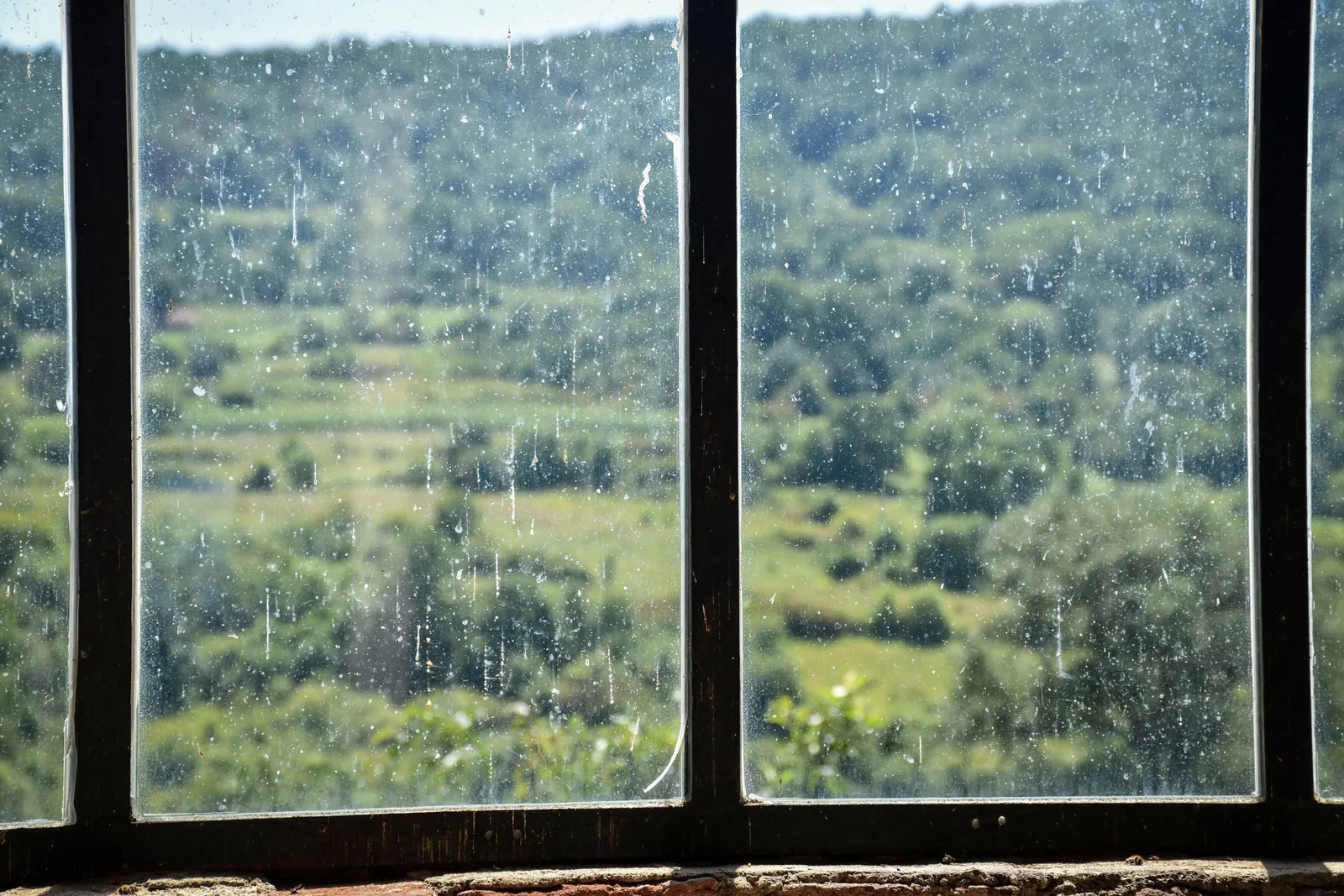
A scratch on glass is annoying, especially if it is in plain sight: in a window, shower wall, table top, mirror or glass door. Sometimes a scratch appears superficial, but sometimes the glass is really damaged. The question then is: can you repair a scratch in the glass, or does the glass need to be replaced?
The short rule is simple: You can sometimes polish light superficial scratches, but you usually cannot remove deep scratches properly. Can you clearly feel the scratch with your nail? Then replacement is often the best solution. In this article we explain how scratches occur, when repair makes sense, when replacement is wiser and what you should definitely not do.
How does a scratch occur in glass?
Glass seems hard and smooth, but it can actually scratch. Sand, metal, tools and incorrect cleaning agents in particular cause damage. Common causes include:
- Sand on a cloth or sponge
- Sand with a scouring sponge
- Clean with abrasive cleaner
- Sliding metal objects over glass
- Rings or jewelry
- Tools for assembly
- Furniture against glass
- Incorrect use of a glass cleaner
- Scrape off limescale with a hard object
- Damage during transport
Scratches on shower glass are often caused by cleaning with aggressive agents. Scratches on table tops are often caused by sliding plates, vases or decorations.
Is glass scratch resistant?
Glass is fairly hard, but not scratch-free. It can withstand scratches better than many plastics, but sharp or hard materials can damage the surface. Especially sand, stone, ceramic and metal can cause scratches. Sand is a known culprit: if there is sand on a cloth and you rub the glass, small scratches will occur. That is why proper cleaning is important. First rinse away dirt and sand before cleaning — you can read more about this in cleaning glass without streaks.
Can you remove a scratch on glass?
That depends on the depth of the scratch. There are roughly three situations.
| Type of scratch | Recovery possible? |
|---|---|
| Very light haze or polish scratches | Sometimes to polish |
| Superficial scratch | Sometimes make it less visible |
| Deep scratch that you feel with your nail | Usually not easy to repair |
| Crack or tear | Do not polish, replace glass |
A light scratch is only on the surface; you can sometimes polish it away. A deep scratch really removes material from the glass and you often cannot completely remove it without deformation.
The nail test: how deep is the scratch?
A simple test is the nail test. Gently run your nail over the scratch:
- Does your nail not get stuck? Then the scratch is probably superficial.
- Do you feel the scratch lightly? Then polishing may help, but the result is uncertain.
- Is your nail obviously hooked into the scratch? Then the scratch is usually too deep.
- Do you see a crack or crack? Then it is no longer a scratch, but glass damage.
This test provides no guarantee, but does help to estimate the severity.
Rule of thumb: can you clearly feel the scratch with your nail, is it in the middle of view or is it safety glass? Then replacement is often the best and safest solution. Polishing is only worth a try for superficial scratches that you can barely feel.
Polish light scratches
Light scratches can sometimes be polished with a special glass polishing compound. This involves treating a very thin layer of the glass surface so that the scratch becomes less visible. This mainly works for:
- Light cleaning scratches
- Superficial haze
- Small scratches
- Scratches that you hardly feel
- Glass that is not coated
- Glass surfaces without special treatment
Polishing is mainly intended to reduce minor damage, not to completely remove deep scratches.
When does polishing not work well?
Polishing works less well on deep or wide scratches. The risk is that you will get a deformation in the glass: you remove glass around the scratch to make the surface flatter again. This can cause:
- Lens formation
- Vision distortion
- Dull spots
- Color difference
- Uneven surface
- A still visible scratch
- Damage to coating
With windows or glass doors, distortion is extra disturbing because you are looking through the glass.
Can you use toothpaste against scratches in glass?
You often read online that toothpaste helps against scratches in glass. In practice, this usually hardly works. Toothpaste can sometimes make very light haze less visible, but it will not make real scratches disappear. Disadvantages:
- Limited results
- Can give a dull spot
- May leave residue
- Does not work on deep scratches
- Can damage coatings
- Often gives false hope
Toothpaste is not a professional solution for valuable glass or sight glass.
Can you use baking soda?
Baking soda is also often mentioned as a home remedy. Like toothpaste, the result is usually limited, and baking soda can also be abrasive. If you rub too hard, you will make more scratches. Therefore, it is best not to use baking soda on:
- Shower glass with coating
- Mirrors
- Coated glass
- Lacquered glass
- Glass with foil
- Expensive table tops
- Visible windows
With glass, caution is better than trying to clean aggressively.
One scratch per type of glass
Where the scratch is located largely determines whether repair is worthwhile. Below are the most common situations.
Scratch in window glass
A scratch in window glass is difficult. If it is in plain view, it is especially noticeable in sunlight or at certain viewing angles. You can sometimes polish light scratches, but for deep scratches it is often better to replace them. Especially with insulating glass, it is usually not practical to repair only one glass sheet. NB:
- Is the scratch on the inside or outside?
- Is it insulating glass?
- Is there a coating on it?
- Is it HR++ glass?
- Is the scratch in the middle of view?
- Is there also a crack?
- Is the glass part of safety glass?
HR++ glass may have a coating. Polishing can damage that coating if the scratch is on the coated side.
Scratch in HR++ glass
HR++ glass has a special coating on one of the glass sides in the cavity. This coating is normally on the inside of the glass package and cannot be reached. A scratch on the visible outside usually does not touch that coating. However, you should be careful with polishing or aggressive agents. HR++ glass is part of an insulating window: if damage occurs to the edge, cracking or tension, this can cause problems. For deep scratches in HR++ glass, replacement is usually better than repair. See also recognizing and replacing leaking double glazing.
Scratch in shower glass
Shower glass is often exposed to limescale, soap residue and cleaning products. Scratches are often caused by incorrect cleaning. Common causes:
- Scouring sponge
- Scrape off limescale
- Aggressive cleaner
- Sand or dirt on the cloth
- Metal pullers
- Hard water softener residue
- Poor cleaning routine
Also pay attention to whether there is a coating on it: some shower walls have an anti-limescale coating, and polishing can remove or damage it. For deep scratches in a shower wall, replacement is often the best solution; you can easily put together a new custom shower enclosure. Prevent new damage with the tips in limescale on shower glass.
Scratch in glass table top
A glass table top is used intensively. Scratches are often caused by sliding plates, vases, laptop stands, decorations or keys. Light scratches are normal, but deep scratches can be disturbing. Tips to prevent scratches:
- Use coasters
- Use felt pads under decoration
- Lift things instead of sliding them
- Remove sand first
- Use placemats
- Do not use abrasives
- Choose custom tempered glass for intensive use
A deep scratch in a table top is usually difficult to repair properly; Polishing can actually give a visible spot.
Scratch in mirror
You have to be extra careful with a mirror. A mirror consists of glass with a reflective layer on the back. Damage to the front can sometimes be polished, but damage to the reflective layer cannot be repaired. Scratch or damage to the back can cause:
- Black spots
- Dull spots
- Loss of mirror image
- Discoloration
- Edge corrosion
A damaged mirror often needs to be replaced, especially if the reflective layer is damaged. You can have a new custom mirror made to exactly the desired size.
Scratch in glass door
Glass doors are often made of tempered glass. Small scratches are caused by rings, bags, keys or cleaning. Please note: tempered glass cannot simply be cut or processed like regular glass. Polishing a superficial scratch is sometimes possible, but deep damage is difficult. Safety is important with glass doors. In addition to the scratch, do you also see a crack, asterisk or damaged edge? Then replacement is wise.
Scratch in coated glass
Coated glass requires extra caution. Consider:
- Shower glass with anti-limescale coating
- Sun-resistant glass
- Sound-resistant glass with special construction
- Mirror glass
- Lacquered glass
- Glass with foil
- Decorative glass
With coated glass, polishing can damage the coating, making the spot more visible. So first check whether the glass has a coating before polishing.
Repair or replace?
When should you replace glass?
Replacement is usually wise when:
- The scratch is deep
- Your nail clearly gets snagged
- The glass is visible
- Polishing would cause distortion
- The glass is coated
- It concerns safety glass
- There is also a crack
- The edge is damaged
- The glass is part of a door, balustrade or shower wall
- You want a sleek end result
In case of damage to safety glass, extra caution is required: damaged glass may have become weaker.
When is recovery still worth it?
Recovery may be worthwhile for:
- Small superficial scratches
- Glass without coating
- Damage beyond direct view
- Decorative glass of limited value
- Light cleaning haze
- Glass that cannot be easily replaced
The goal is usually not "perfectly new", but "less visible".
Can you repair a crack in glass?
No. A crack is different from a scratch: the glass is structurally damaged and polishing does not help. If the glass is cracked, you must replace it, especially in windows, doors, shower walls, balustrades, roof glass, insulating glass and glass in furniture. A crack can become larger due to temperature differences, stress or impacts.
Selection aid: repair or replace?
| Situation | Best choice |
|---|---|
| Light cleaning scratches | Try polishing |
| You can't feel the scratch with your nail Possibly repairable | |
| Scratch feel light | Result uncertain |
| Scratch hooks clear with nail | Replacement is often better |
| Scratch in coated glass | Careful, replace often |
| Scratch in mirror back | Replace |
| Crack in glass | Replace |
| Damaged glass edge | Replace |
| Safety glass damaged | Have replacement assessed |
| Perfect vision desired | Replace |
What should you not do?
Avoid these mistakes:
- Sanding with steel wool
- Sanding with sandpaper
- Use aggressive descaler on coated glass
- Scratching hard with metal
- Use toothpaste on valuable glass
- Polishing without knowing whether there is a coating on it
- Continue to work on deep scratches
- Try to polish away cracks
- Processing glass edges on tempered glass
Repairing too aggressively can actually make the damage worse.
Common mistakes when scratching glass
- Working with abrasives too quickly — this can actually cause additional scratches.
- Try to polish away deep scratches — often causes distortion or dull spots.
- Forgot coating — coated glass can be damaged by polishing.
- Confuse crack with scratch — you don't repair a crack, you replace it.
- Use metal scrapers — metal can damage glass, especially if used incorrectly.
- Do not do a nail test — the nail test helps to estimate the depth.
- Expect perfect results — repair sometimes makes a scratch less visible, but not always invisible.
How do you prevent new scratches?
Prevention is better than recovery. Glass remains more beautiful if you use it properly and clean it with the right cleaning and tool range, such as a soft microfiber cloth and a mild detergent:
- Rinse away sand and dirt first
- Use a soft microfiber cloth
- Do not use a scouring pad
- Use a mild cleaning agent
- Lift things instead of sliding them
- Use coasters
- Use felt pads under decoration
- Clean shower glass regularly
- Do not use a metal scraper
- Dry glass with a soft cloth
Protective caps or underlays are often wise for table tops and wall shelves.
Checklist for a scratch in glass
- Is it a scratch or a crack?
- Can you feel the scratch with your nail?
- Is the scratch visible?
- Is the glass coated?
- Is it tempered or laminated glass?
- Is the scratch on the edge?
- Is the glass part of a door or balustrade?
- Is it insulating glass?
- Do you want a perfect result?
- Is replacement more affordable than repair?
Conclusion
You can sometimes repair a scratch on glass, but only if the scratch is superficial. Light cleaning scratches or haze can sometimes be polished away. Deep scratches that you feel with your nail are usually difficult to remove properly. Be careful with home remedies such as toothpaste, baking soda or abrasive cleaner: they rarely help with real scratches and can damage glass or coating. Extra caution is required with coated glass, mirrors, safety glass, shower glass and insulating glass.
The best rule of thumb remains simple: can you clearly feel the scratch with your nail, is it in the middle of view or is it safety glass? Then replacement is often the best and safest solution.
Read more about tempered glass, a custom mirror or recognizing and replacing leaking double glazing. Do you want to replace a damaged window? Simply order new glass to size, or view our options for shower and bath.