
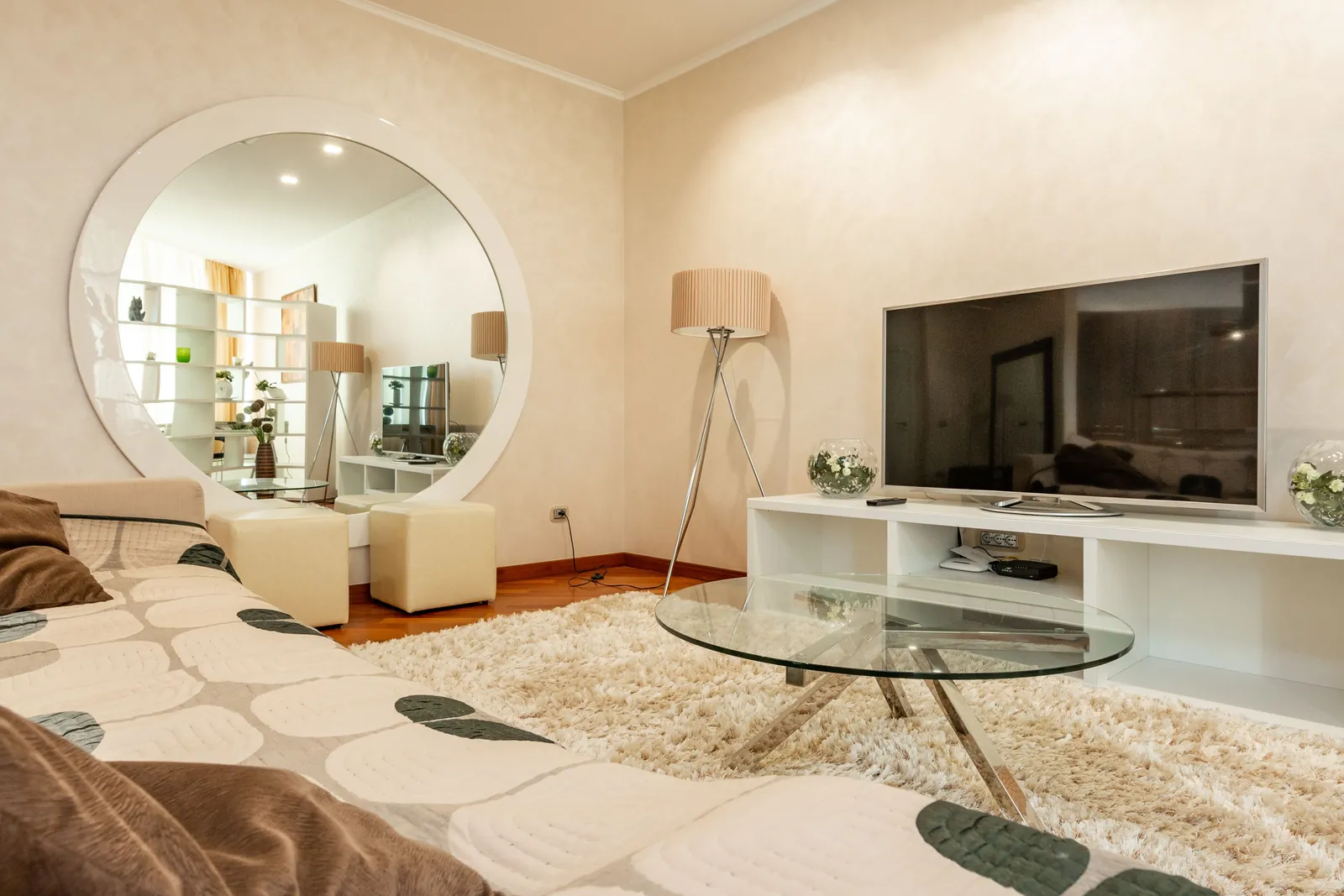
A custom glass table top is ideal if you want to protect an existing table, replace an old table top or make a table yourself. Glass gives a sleek look, is easy to clean and suits almost any interior. The short rule is: choose tempered glass for extra safety, determine the thickness based on the application and always neatly finish visible edges with a ground or polished edge.
In this article we explain which glass thickness you need, when to choose tempered glass, which edge finish is beautiful and what you should pay attention to when ordering a custom glass table top.
Why a custom glass table top?
A glass table top can be used in different ways. Sometimes the glass is placed on top of an existing table as a protective plate. Sometimes the glass forms the entire table top on a base.
A glass table top is often used for:
- dining tables
- coffee tables
- desks
- side tables
- side tables
- garden tables
- conference tables
- wooden tables that need to be protected
- tables with special bases
- custom interiors
The advantage of customization is that you choose the shape, size, thickness and finish yourself. This means that the glass fits exactly on your table or base.
Which glass do you use for a table top?
For a table top you usually choose tempered glass. Tempered glass is stronger than normal glass and safer if broken. When tempered glass breaks, it shatters into small grains instead of large sharp shards. That is important, because a table top is used daily. You place glasses, plates, laptops, decorations and other items on it. Children, chairs or hard objects can also bump against the edge.
Tempered glass is especially recommended for:
- loose table tops
- larger glass plates
- table tops on a base
- coffee tables
- dining tables
- desks
- tables that children can reach
- tables with visible edges
For a thin protective plate on an existing table, normal glass can sometimes be sufficient, but tempered glass often remains the safer choice. You can read more background in tempered glass: what is it?.
When should you not choose regular glass?
Ordinary float glass is cheaper, but less safe. When it breaks, large sharp shards are created. This is usually not desirable for table tops.
Avoid using regular glass for:
- large table tops
- tables without full support
- tables where you often sit
- coffee tables
- child-friendly areas
- glass plates with protruding corners
- tables that are used intensively
Tempered glass is more sensible for almost all visible and touchable table tops.
What thickness of glass do you need for a table top?
The correct glass thickness mainly depends on the application. Is the glass fully supported on an existing table? Then it can be thinner. Does the glass support itself on a base? Then you need thicker glass.
Rule of thumb: fully supported glass can be thinner, self-supporting glass on a base must be thicker and toughened.
| Application | Commonly used thickness |
|---|---|
| Protective plate on existing table | 4–6 mm |
| Coffee table on full frame | 6–8 mm |
| Separate table top on base | 10–12 mm |
| Large dining table | 10–15 mm |
| Desk glass as a protective plate | 4–6 mm |
| Side table | 6–10 mm |
| Table top with little support | 12 mm or thicker |
These are general guidelines. For large spans, few support points or heavy loads, a thicker glass plate may be necessary. Are you in doubt? Then read what glass thickness do I need?.
Glass as a protective plate on a wooden table
Do you want to protect a wooden table against scratches, stains and moisture? Then you can place a custom glass plate on top of the table. For a protective plate, 4 mm or 6 mm glass is often sufficient, because the table itself fully supports the glass.
Choose a protective plate for:
- wooden dining tables
- desks
- antique tables
- tables with fragile tops
- tables where children sit
- tables that are used intensively
Please note: do not place glass directly on wood if you want to prevent scratches or sliding. Use small transparent rubbers or protective caps between the glass and the table top. You can find rubber buffers and protective caps in our glass articles.
Glass as a complete table top
If the glass itself forms the table top, you will need thicker glass plates. The glass then rests on legs, a frame or a base. The glass plate must be able to support itself.
For loose table tops, the following is often chosen:
- 8 mm for small tables
- 10 mm for normal tables
- 12 mm for larger tables
- 15 mm or more for heavy or luxury applications
The larger the table and the less support, the thicker the glass should be. A large top that only rests on four corners requires more thickness than a top that rests on a frame all around.
Per piece of furniture: which thickness do you choose?
Glass coffee table
Tempered glass from 8 to 12 mm is often used for a coffee table. The correct thickness depends on the size and support. Safety is extra important with a coffee table, because the table is low. People walk past it, children play around it and the edges are at knee height.
NB:
- choose tempered glass
- finish edges smoothly
- consider rounded corners
- use sufficient thickness
- avoid sharp protruding points
- make sure the blade is stable
Rounded corners are often a nice choice for coffee tables.
Glass dining table
A glass dining table receives a lot of stress every day. Think of dishes, pans, arms, cleaning and shifting items. For dining tables, thicker tempered glass is usually chosen, often 10 or 12 mm. Larger tables may require 15 mm.
Pay particular attention to:
- dimensions
- chassis
- support points
- tax
- edge finishing
- safety
- weight of the glass plate
A large glass dining table can become heavy. Therefore, check whether the chassis is stable and strong enough.
Glass desk top
A glass desk top is often used as a protective layer on top of a wooden or lacquered desktop. Then 4 or 6 mm is usually sufficient. A glass plate on a desk protects against:
- scratches
- coffee stains
- wear and tear
- ink
- laptop use
- mouse use
- daily load
Do you want to keep photos, drawings or documents visible through the glass? Then clear glass is useful. Please note that glass can reflect in bright light.
Which edge finish do you choose?
The edges of table tops are visible and touchable. That is why edge finishing is important.
| Edge finishing | When to choose? |
|---|---|
| Rounded sharp edges | Basic finish for less visible edges |
| Flat ground | Neat matte edge |
| Flat poly cut | Smooth, glossy luxury edge |
| Facet cut | Decorative bevel |
| Rounded corners | Extra safe and pleasant to use |
For table tops, flat poly cut is usually the best choice. The edge is smooth, sleek and beautifully finished. On the site this finish is called "Polished (flat poly)" and you choose it when putting together your custom glass per glass type. Glass of 4 mm and thicker can be polished; With tempered glass the edge is skimmed off before hardening. Rounded corners are often wise for coffee tables and child-friendly areas. You can read more about the differences in edge finishing of glass: sharp edges or ground?.
Straight corners or rounded corners?
Right angles give a sleek and modern look. Rounded corners are softer and safer.
Choose right corners for:
- modern dining tables
- tables with sleek base
- protective plates that follow the blade exactly
- minimalist interiors
Choose rounded corners for:
- coffee tables
- tables that children can reach
- tables in walking routes
- side tables
- desks that you walk close to
A small radius can make a big difference. The table remains tight, but the corner feels less sharp.
What shape can a glass table top have?
Custom glass can be made in many shapes. Common forms are:
- rectangular
- square
- round
- oval
- half round
- organic
- with rounded corners
- with sloping side
- with recess
A clear drawing is important for special shapes. Provide all dimensions in millimeters and state the radius of rounded corners. A mold may be required for complex shapes. Also see our tips for measuring glass.
Clear glass, extra clear glass or tinted glass?
You can choose from different types of glass for table tops.
| Glass type | Appearance |
|---|---|
| Clear glass | Standard glass with light green glow |
| Extra clear glass | Less green glow, more luxurious appearance |
| Gray glass | Modern dark look |
| Bronze glass | Warm luxurious appearance |
| Frosted glass | Soft matte appearance |
| Satin glass | Less transparent, calmer image |
Standard clear glass naturally has a light green tint, especially visible at the edges. This is more noticeable with thicker glass. Do you want the brightest appearance possible? Then choose extra clear glass.
Assembly: what should you pay attention to?
Glass on a wooden table
A glass plate on wood can be very beautiful, but wood works. It can expand or contract slightly due to temperature and moisture.
NB:
- do not clamp glass
- use rubber caps
- prevent dirt between glass and wood
- clean both surfaces
- If necessary, leave a little space at the edge
- prevent water from remaining under the glass
In untreated wood, moisture under the glass plate can cause stains. Therefore, make sure that the wood is properly finished.
Glass on a metal base
A metal base is strong, but glass should not rest directly on metal. Metal-to-glass contact can cause stress or damage.
Therefore always use:
- rubber support points
- transparent glass buffers
- soft spacers
- anti-slip caps
- even support
Also check whether the base is flat. If one corner is higher, tension can arise in the glass plate.
Glass on separate legs
With a table top on separate legs, the support is limited. The glass then carries much more on its own.
NB:
- use sufficiently thick glass
- choose tempered glass
- ensure stable legs
- distribute support points logically
- avoid excessive overvoltage
- use suitable mounting or buffers
- check that the blade cannot slide
When in doubt, a complete frame is safer than just four small supports.
Should there be holes in the table top?
Sometimes holes are needed, for example for mounting, cable entry or a parasol hole for a garden table. You choose drillings, recesses and corner finishes when putting together in the custom glass configurator. With tempered glass, holes must be made before tempering. Drilling afterwards is not possible.
Please note:
- diameter
- distance to the edge
- position
- type of attachment
- protection between metal and glass
- rounded edges around the hole
Always provide a clear drawing with all dimensions in millimeters.
Use glass table top outdoors
Glass can be used outdoors, but you must take wind, temperature and mounting into account. Tempered glass is often wise for outdoor use.
For outdoor table tops you should pay attention to:
- stability
- prevent blowing away
- safe edge finish
- temperature differences
- dirt and sand
- load due to objects
- good support
Frosted or tinted glass can be beautiful outdoors, but dirt and limescale can be more visible. Regular cleaning remains necessary.
How heavy is a glass table top?
Glass weighs on average approximately 2.5 kg per m² per millimeter of thickness. Example: a glass plate of 1000 × 2000 mm is 2 m².
| Thickness | Estimated weight (2 m²) |
|---|---|
| 6 mm | about 30 kg |
| 8 mm | about 40 kg |
| 10 mm | about 50 kg |
| 12 mm | about 60 kg |
A large table top can therefore be heavy. Take lifting, mounting and load-bearing capacity of the chassis into account. Calculate your weight exactly with our explanation of calculate glass weight.
How do you prevent scratches on a glass table top?
Glass is hard, but not scratch-free. Sand and hard materials in particular can cause scratches.
Tips to limit scratches:
- use coasters
- use placemats
- lift heavy objects instead of sliding them
- clean with a soft cloth
- first remove sand carefully
- do not use a scouring pad
- do not use aggressive abrasives
Minor signs of wear may occur during daily use. That is normal, especially with dining tables and desks.
Common mistakes with glass table tops
- Use regular glass for a loose table top — tempered glass is usually safer for loose table tops.
- Choose glass that is too thin — a thin sheet of glass can be fragile or unstable if not fully supported.
- Do not choose an edge finish — on table tops the edges are visible and touchable; have them sharpened neatly.
- Place glass directly on metal — always use soft buffers between glass and base.
- Do not take weight into account — large panes of glass are heavy; check the chassis and plan the lifting well.
- Leave sharp corners on coffee tables — rounded corners are often safer and more pleasant.
- Forgot Holes — Tempered glass requires holes to be made in advance.
Checklist for a custom glass table top
- Will the glass be a protective plate or a complete table top?
- Is the magazine fully supported?
- What size do you need?
- Do you measure in millimeters?
- Which glass thickness suits the application?
- Do you choose tempered glass?
- What edge finish do you want?
- Do you want straight or rounded corners?
- Do you want clear, extra clear or tinted glass?
- Are holes or recesses needed?
- Is the chassis stable enough?
- Do you use rubber buffers?
- How heavy is the glass plate?
- Can you lift and place the glass safely?
Conclusion
A custom glass table top is a beautiful and practical choice for dining tables, coffee tables, desks and custom furniture. Preferably choose tempered glass, especially if the glass is used as a separate table top or is subjected to intensive loads. For a protective plate on an existing table, 4 or 6 mm is often sufficient. For a separate table top you usually choose 10 or 12 mm, depending on the size and support. For large tables or few support points, thicker glass may be necessary.
Always neatly finish visible edges. Flat poly cut edges give a luxurious look and feel. Rounded corners are often wise for coffee tables and child-friendly areas. Measure carefully, check the weight and ensure there are soft buffers between the glass and the base.
Continue reading:
- Tempered glass: what is it?
- What thickness of glass do I need?
- Edge finishing of glass: sharp edges or ground?
- Measuring glass
- Calculate glass weight
Ready to order? Create your custom glass or view our safety glass for a table top that can safely handle daily use.