
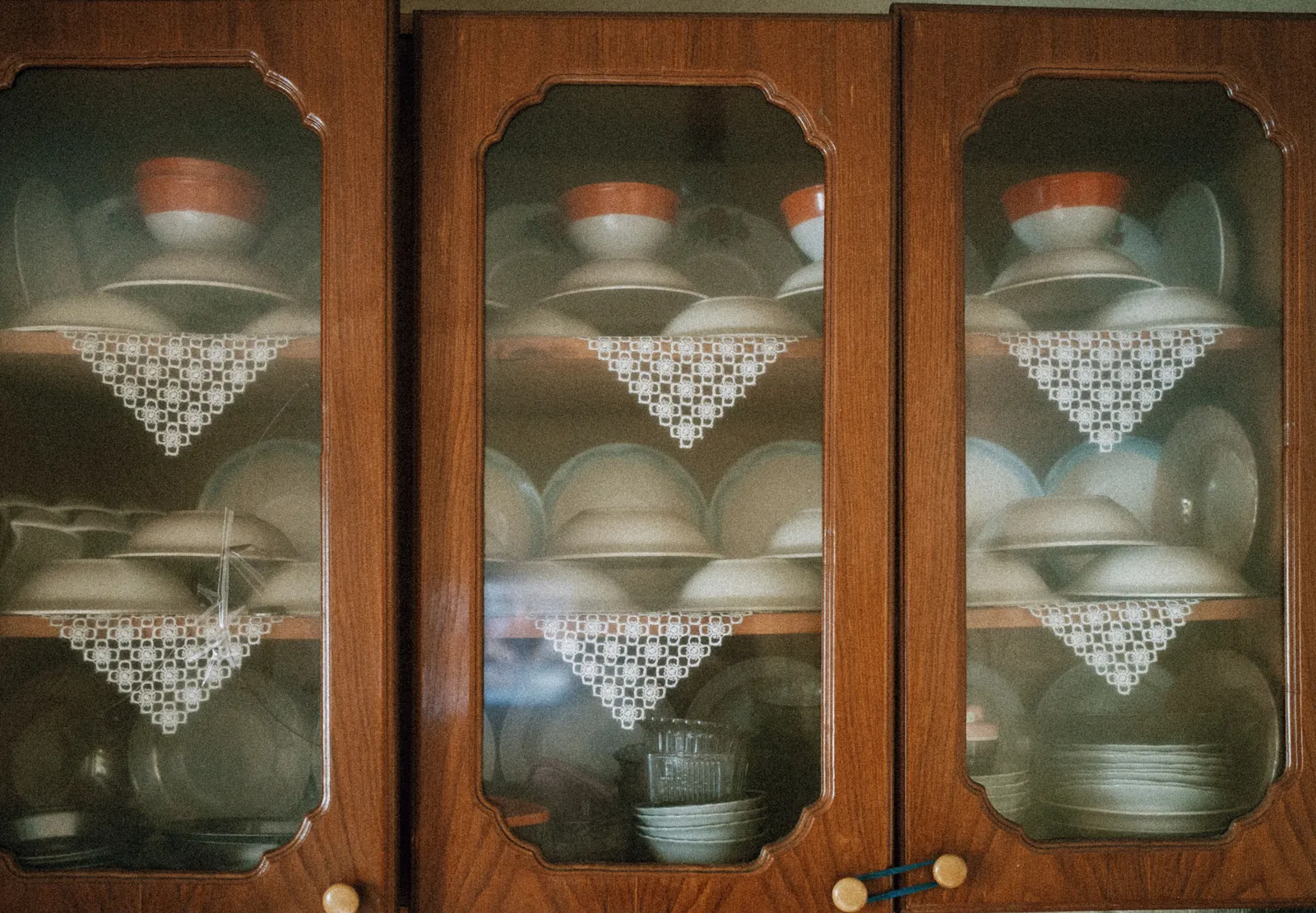
A display cabinet is intended to present items beautifully and safely: crockery, collectibles, jewelry, model cars, glassware, products or decoration. But if the glass is damaged, cracked or outdated, you often want to replace it with new custom glass. The short rule: measure the old glass and the rebate accurately, choose the correct glass thickness and pay close attention to edge finish, safety and the type of mounting. Tempered glass is often wise for doors and sliding doors.
In this article you can read which glass to choose for a display cabinet, how to measure glass and what to pay attention to with shelves, doors and sliding windows.
When should your display cabinet glass be replaced?
You can replace glass display cabinet for various reasons. Sometimes the glass is broken, but often it is also about improving appearance or safety. Common reasons:
- Glass is broken or cracked
- Edges are damaged or the glass is scratched
- Shelf has sagged or the sliding door is not running properly
- Glass is missing
- You want thicker or stronger glass
- You want frosted glass or smoked glass
- You want to renovate the cupboard
- Existing glass has a dangerously sharp finish
In old display cabinets, the glass is sometimes thin and sharp at the edges. Then replacement can not only be more beautiful, but also safer.
Which glass do you use for a display cabinet?
You can use different types of glass for a display cabinet. The right choice depends on the location in the cupboard.
| Part | Glass type |
|---|---|
| Display shelf | Float glass or tempered glass |
| Glass door | Tempered glass |
| Sliding fruit | Float glass or tempered glass |
| Side panel | Float glass, tempered glass or laminated glass |
| Top | Depending on tax |
| Back wall | Clear, frosted or mirror glass |
For glass that moves, such as doors or sliding windows, safety is more important than with a fixed shelf.
Float glass or tempered glass?
Float glass is standard flat glass. It is suitable for many simple applications, such as small fixed panes of glass or light shelves in a cupboard. Tempered glass is stronger and safer. It is additionally treated during production, making it more resistant to impacts. When tempered glass breaks, it shatters into small grains.
| Glass | When to use? |
|---|---|
| Float glass | Small fixed checks or light planks |
| Tempered glass | Doors, sliding doors, larger glass panels |
| Laminated glass | When glass must stay together when broken |
| Frosted glass | For less insight |
| Smoked glass | For a luxurious dark look |
| Mirror glass | As a back wall or decorative element |
Tempered glass is often the best choice for display doors. Would you like to know more about the properties? Then read tempered glass: what is it?.
What thickness of glass for a display cabinet?
The correct glass thickness depends on the size, application and load.
| Glass thickness | Application |
|---|---|
| 3 mm | Small light windows in old cupboards |
| 4 mm | Widely used for display cabinets |
| 5 mm | Sturdier checks or planks |
| 6 mm | Shelves, doors and larger windows |
| 8 mm | Heavier planks or larger applications |
| 10 mm | Large or heavily loaded planks |
For small display cabinet doors, 4 or 5 mm is often sufficient. For glass shelves, 6 or 8 mm is often chosen, depending on the length and load. Are you in doubt? The selection aid in which glass thickness do I choose? will help you further.
Glass thickness for display cabinet shelves
Glass shelves are given weight to bear. That is why you have to pay extra attention to thickness, length and support with planks.
| Plank length | Light load | Heavier load |
|---|---|---|
| Up to 500 mm | 4-5 mm | 6 mm |
| 500-800 mm | 5-6 mm | 8 mm |
| 800-1200 mm | 6-8 mm | 8-10 mm |
| More than 1200 mm | 8-10 mm | Have it assessed |
Tax makes a big difference. A shelf with perfume bottles or crockery should be stronger than a shelf with light decorations.
How heavy is glass display cabinet?
Glass weighs approximately 2.5 kg per m² per millimeter of thickness. Two calculation examples:
Glass shelf of 800 × 300 mm in 6 mm glass: 0.8 × 0.3 = 0.24 m²; 0.24 × 6 × 2.5 = 3.6 kg.
Door of 500 × 1200 mm in 5 mm glass: 0.5 × 1.2 = 0.6 m²; 0.6 × 5 × 2.5 = 7.5 kg.
Please note: the weight of the glass counts for hinges, rails and shelf supports. The fitting must be able to support this. Easily calculate your weight with the explanation in calculate glass weight.
Rule of thumb: measure the rebate or rail accurately in millimeters and choose tempered glass for everything that moves, such as doors and sliding doors.
Replaced glass cabinet door glass
For a display cabinet door, the glass must fit properly and be safe. The door is opened and closed, causing the glass to withstand more than a fixed window. Please note:
- Glass thickness and weight
- Hinges
- Rebate size and clearance
- Edge finishing
- Any holes
- Handle
- Closure or magnetic closure
Tempered glass is often wise for door glass, especially if the door is larger or is used frequently.
Replacing the sliding doors of the display cabinet
Many display cabinets have sliding glass doors. They slide into a plastic, aluminum or wooden rail. With sliding doors, the size is very important: the window must be high enough to remain in the rails, but low enough to be placed. NB:
- Height of top and bottom rail
- Overlap between sliding doors
- Total width
- Thickness that fits into the rail
- Any handle holes
- Edge finishing and smooth sliding
- Clearance to lift the window out
Sliding doors often use 4, 5 or 6 mm glass, depending on the rail. Do you want to make new sliding doors yourself? Read making sliding glass doors for a display cabinet.
How do you measure sliding glass for a display cabinet?
Sliding glass is measured differently than a normal pane of glass. You need to take the top rail and bottom rail into account.
- Measure the width of the opening.
- Determine how many sliding windows there will be.
- Take into account overlap between the panes.
- Measure the height between bottom rail and top rail.
- Check how much space the top rail allows to lift the glass.
- Measure the maximum glass thickness that will fit in the rail.
- Check whether the window can be easily installed and removed.
The overlap is important: without overlap you get an open gap between the sliding doors. You can find more general measuring explanations in measuring glass.
Replaced shelf glass display cabinet
With glass shelves, load-bearing capacity is the most important thing. The plank should not bend too much and should lie safely on the supports. Check:
- Length and depth of the shelf
- Thickness of the old glass
- Number of shelf supports and the distance between them
- Weight of the items
- Edge finishing and rounded corners
- Type of cabinet material
Long planks often require additional supports or thicker glass.
Which edge finish do you choose?
The edges of glass display cabinets are often visible and sometimes touchable. That is why edge finishing is important.
| Edge finishing | When to choose? |
|---|---|
| Sharp edges ground off | Basic finish |
| Flat ground | Neater and safer |
| Flat poly cut | Nice smooth visible edge |
| Facet cut | Decorative classic look |
| Rounded corners | Practical for shelves and doors |
For glass shelves and doors, a neat cut edge is usually wise. For visible work, flat poly ground is often the best choice. You can read the difference between sharp and ground edges in edge finishing of glass: sharp edges or ground?.
Should corners be rounded?
Rounded corners can be useful for glass display cabinets, especially for glass shelves that you regularly touch or remove. Rounded corners are wise for:
- Shelves in open cupboards
- Doors without frame and sliding doors
- Glass at hand height
- Cupboards in children's rooms
- Shop showcases and commonly used furniture
A small corner rounding makes the glass safer and more pleasant to use.
Holes in display cabinet glass
Some display cabinet doors have holes for hinges, handles or locks. Those holes must be made in advance. NB:
- Hole diameter
- Distance to glass edge
- Position from top and side
- Fitting type and glass thickness
- Tolerance
- Tempered glass or not
With tempered glass, holes must be made before tempering. Drilling afterwards is not possible. You can immediately select drill holes (up to ø 80 mm), recesses and rounded corners when you configure your window with custom glass.
Measure yourself or copy the old glass?
Can old display cabinet glass be recreated?
Yes, usually new glass can be custom made from the old glass. This is useful if the old window is still intact. Use the old glass as an example for width, height, thickness, shape, rounded corners, holes, recesses, bevels and edge finish.
Please note: if the old glass was actually too small, too thin or damaged, it is better to remeasure rather than copy exactly.
What if the old glass is broken?
If the old glass is broken, you can sometimes still use the parts to reconstruct the size. But always check the opening or rebate of the cabinet. Then measure:
- Inner dimension of the rebate
- Width and height in several places
- Depth of the groove
- Room for play
- Thickness of rails or profiles
- Position of holes or hinges
Never measure just a loose shard: it may be incomplete.
Clear glass, frosted glass or smoked glass?
Appearance is important for display cabinets. You can choose from different types of glass.
| Type of glass | Effect |
|---|---|
| Clear glass | Maximum visibility |
| Extra clear glass | Less green tint |
| Frosted glass | Less insight |
| Smoked glass | Luxurious dark appearance |
| Bronze glass | Warm classic look |
| Figure glass | Decorative |
| Mirror glass | Depth effect as a back wall |
For display cases in which products or collectibles must be clearly visible, clear or extra clear glass is often the best choice.
Extra clear glass for display cases
Standard glass has a light green tint. With thicker planks you will mainly see that tint on the edges. Extra clear glass has less green color cast and gives a more luxurious appearance. This is especially nice for luxury display cases, jewelry, art objects, white products, designer cabinets, shops, museum presentation and thick glass shelves. Standard clear glass is often fine for simple cabinets.
Smoked glass in a display cabinet
Smoked glass gives a dark, luxurious appearance and is often used in modern interiors, designer cabinets and shops. Advantages: stylish dark look, beautiful with black profiles and suitable for decorative display cases. Disadvantage: smoked glass transmits less light. If you want to display products clearly, additional lighting may be necessary.
Mirror glass as back wall
A mirror back wall can make a display cabinet appear deeper and fuller. You also see objects from the back, which can be nice with glassware, jewelry or collectibles. NB:
- The mirror must be well supported
- Edges must be protected
- Use suitable mirror sealant when gluing
- Prevent moisture behind the mirror
- Choose safe mounting
For old display cabinets, a new mirror back wall can immediately make the cabinet look more luxurious. Want to know more? Read custom mirrors: what to look out for or view custom mirrors.
Glass per cabinet type
Glass in wooden display cabinet
In wooden display cabinets, glass is often in a rebate or groove. Sometimes it is secured with small slats, putty, clips or nails. Please note: wood can be crooked, rebates can be uneven and old slats can break. The glass should have some play, the edges should not pinch and the wood should not cause pressure points. With antique cabinets, careful disassembly is important to prevent damage to the wood.
Glass in metal display cabinet
In metal showcases, glass is often placed in profiles or rubbers. The glass thickness must then fit exactly. Check profile width, rubber thickness, maximum glass thickness, method of clamping, screws or clips, corrosion and clearance. Glass should not rest directly against metal: use rubbers or protective profiles.
Glass in store display case
Shop showcases are used intensively and must be safe. Customers walk past the display case, doors open often and products are moved regularly. The following are important: tempered glass, safe edge finishing, sufficient thickness, strong hinges, sturdy shelves, locks, burglar resistance, ease of cleaning and presentation quality. Laminated glass or extra-secure glass can be interesting for expensive products.
Can you replace display cabinet glass yourself?
For small panes or boards, a handy handyman can often replace the glass himself. Still, you have to work carefully:
- Wear gloves and remove old glass safely
- Measure accurately and avoid tension on the glass
- Use appropriate clips or carriers
- Do not place glass hard on metal or stone
- Check that doors close smoothly
- Do not use damaged fittings
For large display cases, doors or retail applications, professional installation is safer.
Common mistakes with glass display cabinet
- Blind copy old glass thickness — sometimes the old glass was too thin; check whether the thickness still suits the use.
- Don't choose an edge finish — sharp edges are unsafe, especially on shelves and doors.
- Wrong thickness for the rails — sliding glass must fit exactly into the existing rails.
- No overlap with sliding doors — without overlap, a gap will appear between the windows.
- No tempered glass on doors — doors move and take more impact; tempered glass is often safer.
- Report holes too late — with tempered glass, holes must be made in advance.
- Underestimating the weight of shelves — dishes, glassware or products may be heavy.
Selection aid: which glass display cabinet do you choose?
| Situation | Best choice |
|---|---|
| Small fixed window | 3-4 mm float glass |
| Glass door | Tempered glass |
| Sliding doors | 4-6 mm, depending on rail |
| Glass shelf light use | 5-6 mm |
| Heavy duty glass shelf | 8-10 mm |
| Luxury presentation | Extra clear glass |
| Modern look | Smoked glass |
| Less insight | Frosted glass |
| Back wall | Mirror glass |
| Shop display case | Tempered or laminated glass |
Checklist before ordering glass display cabinet
- Which part are you replacing: door, shelf, sliding window or side panel?
- Is the glass fixed or moving?
- What thickness fits the cabinet and should the glass be tempered?
- How much weight is on the board and how many supports does it have?
- Are the edges visible and what edge finish do you want?
- Do corners need to be rounded?
- Are holes or recesses necessary?
- Is there a rail that the glass must fit into and is overlap necessary?
- Do you want clear, extra clear, frosted or smoked glass?
- Is it for private use or retail use?
Conclusion
Replacing display cabinet glass seems simple, but the right size, thickness and finish are important. For fixed small panes, standard glass can often be sufficient. Tempered glass is usually more sensible for doors, sliding doors and larger glass parts. Pay close attention to the load, length and support of glass shelves: a shelf with heavy items requires thicker glass or extra supports. In addition, choose a neat edge finish, especially if the edges are visible or touchable. Always measure accurately in millimeters and check whether the glass fits into the existing rebate, rail or profiles.
Read more? View which glass thickness do I choose?, tempered glass: what is it? and measure glass. Ready to order? Configure your window with custom glass or view the display and furniture fittings for the matching hinges and supports.